organelle – a specialised part within a cell that performs specific functions
(Pronounced or-gan-ell)
Note: One way to think of organelles is everything in a cell except cell walls, cell membranes and chloroplast. So this includes such things as nucleus, mitochondria, ribosomes, and vacuoles etc.
To remember the meaning of organelle, use the following mnemonic:
The organ was built by the elephant (organelle) in its cell from specialised parts.

Organelles are structures found within cells that perform specific functions essential for the cell's survival and other operations. Common organelles include the nucleus (which controls cell activities and contains DNA), mitochondria (which produce energy through respiration), and chloroplasts in plant cells (which carry out photosynthesis).
Each organelle has specific structure that is adapted to its particular function, and they work together in a coordinated manner to maintain cellular homeostasis and carry out life processes.
Animal Cell
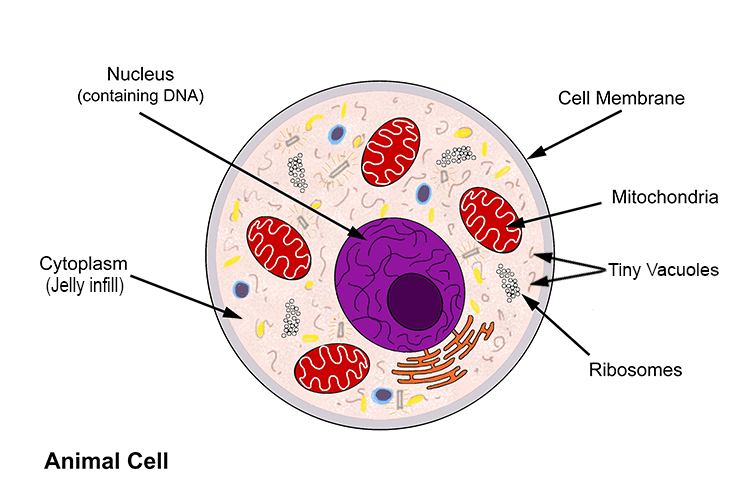
The organelles in this animal cell include nucleus, mitochondria, ribosomes, and cytoplasm but there will be many more.
Plant Cell
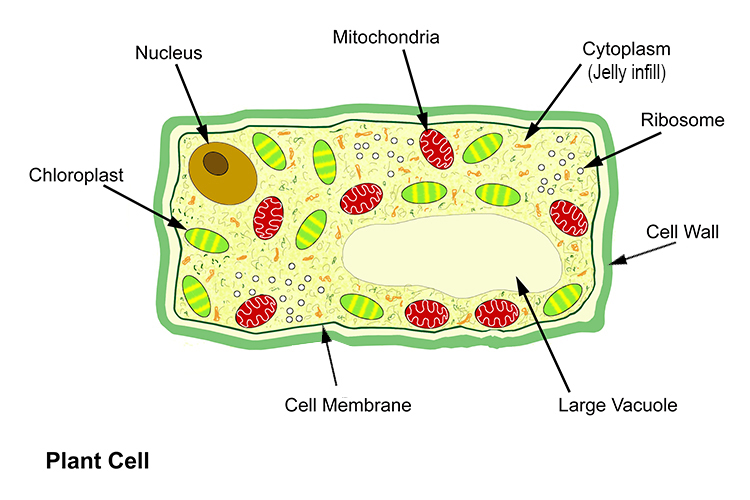
The organelles in this plant cell include nucleus, mitochondria, ribosomes, large vacuole, and cytoplasm but there will be many more.
(Note: A vacuole is a membrane-bound organelle).