composite – materials made of two different materials held together through binding
(pronounced kom-puh-sit)
To remember the meaning of composite, use the following mnemonic:
Reinforced concrete is composed of two opposite (composite) materials, concrete which is very strong in compression, and steel which is very strong in tension. These two materials are held together through binding.
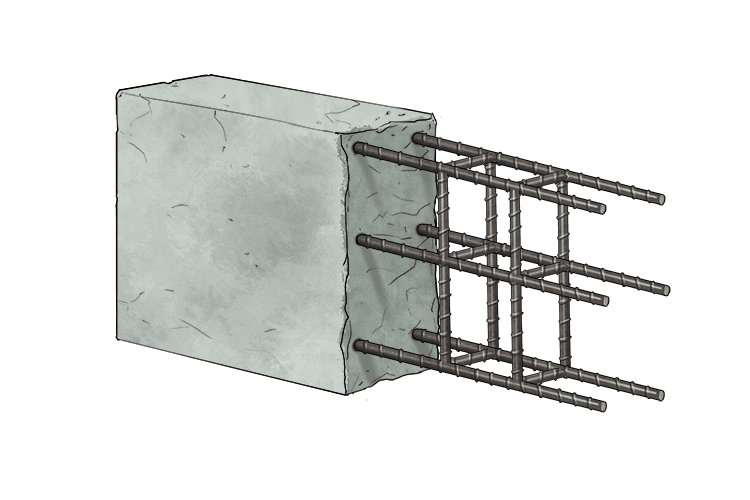
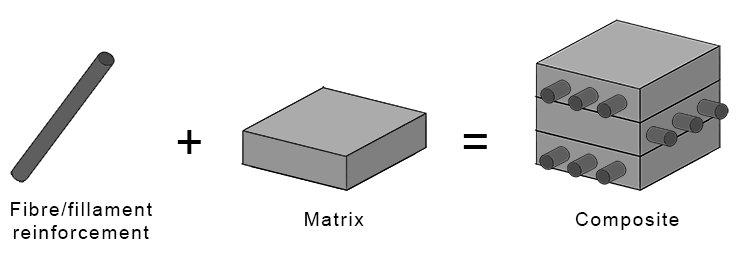
A composite is material made of a combination of two or more different materials that are mixed or bonded together to create a new material with improved properties. A composite is designed to have better characteristics than any of the individual materials would have on their own. Composites typically consist of a reinforcement material (such as fibres or particles) embedded in a matrix material (such as plastic, metal, or ceramic) that binds everything together. Common examples include fibreglass, which combines glass fibres with plastic resin to create a strong but lightweight material. Concrete is another composite material, made from cement, sand, gravel and water and very widely used.
The key advantages of composites is that they can be specifically engineered to have properties like high strength, low weight, flexibility, or resistance to corrosion, making them extremely useful in manufacturing, sport, and construction.
Note: Don't get confused between an alloy and a composite. Alloys are uniform mixtures of metals whereas composites have two or more distinguishable parts.