ionic bonding – attraction between oppositely charged ions
(pronounced eye-on-ik)
To remember the meaning of ionic bonding, use the following mnemonic:
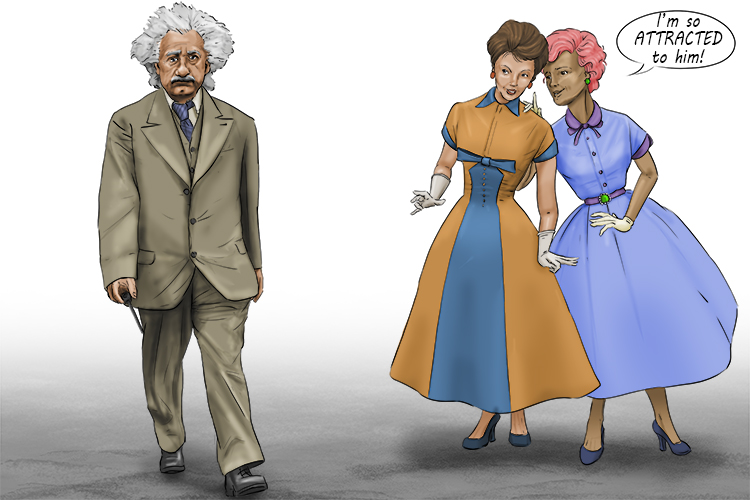
The iconic (ionic) man attracted lots of women.
Ionic bonds are a type of chemical bond formed when electrons are transferred from one atom to another, creating oppositely charged atoms (ions) that attract each other. This typically occurs between a metal atom and a non-metal atom. The metal atom loses one or more electrons to become a positively charged ion, while the non-metal atom gains these electrons to become a negatively charged ion. The strong electrostatic force of attraction between these oppositely charged ions is what holds them together in an ionic bond.
Compounds formed by ionic bonding, such as sodium chloride (table salt), usually have high melting and boiling points. These compounds can often conduct electricity when molten or dissolved in water, and often form crystalline structures.
To see a diagram of how ionic bonds work within a sodium chloride molecule, see the linked page here.