denominator – the bottom number in a fraction
(pronounced duh-nom-ih-nay-tuh)
To remember the meaning of denominator, use the following mnemonic:
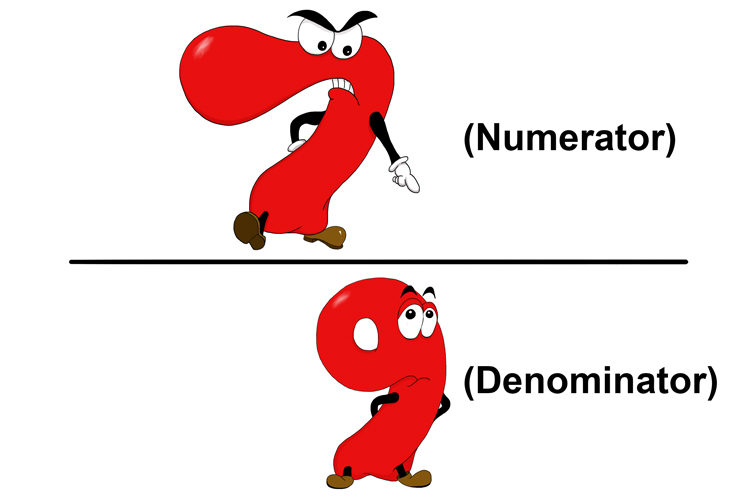
The denominator is down at the bottom of the fraction and is dominated by the numerator.
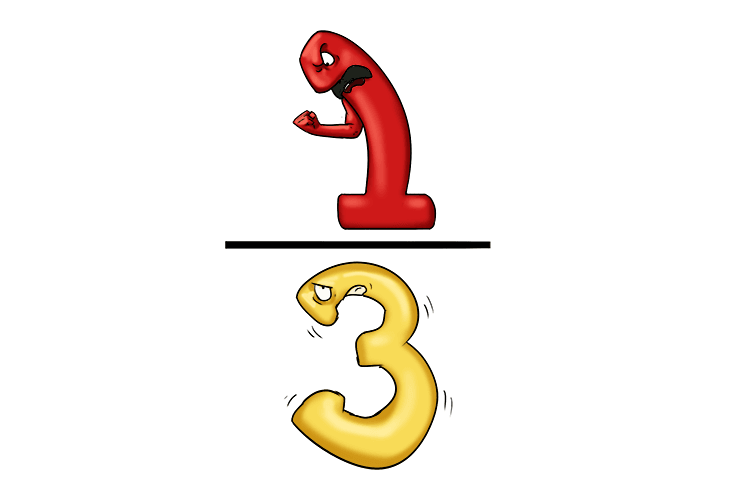
Recall that the denominator is the bottom number because it's down below.
NUmerator = Up (U for up)
Denominator = Down (D for Down)
And
Example
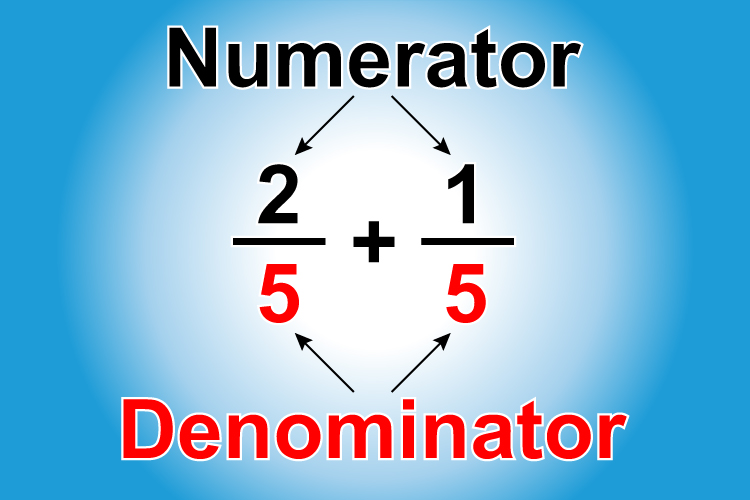
The denominator indicates how many equal parts the whole has been divided into.
For example, in the fraction `3/4` , the denominator is 4, which tells us that something has been split into four equal pieces. The denominator works together with the numerator (the top number) to express a part of a whole so `3/4` means we have 3 parts out of the 4 total parts.
The denominator is essential for understanding the size of each fraction piece: a larger denominator means smaller pieces (since you're dividing the whole into more parts), while a smaller denominator means larger pieces.