pH scale – the measure of the acidity or alkalinity of a solution
To remember the meaning of pH scale, use the following mnemonic:
Think of the Power of Hydrogen to remember pH scale. The higher the concentration of hydrogen ions, the more acidic a substance is.
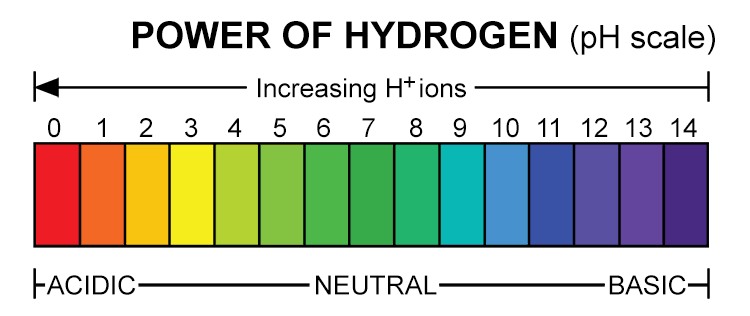
The pH scale is a measure of how acidic or alkaline a solution is, ranging from 0-14. A pH of 7 is considered neutral, like pure water, while values below 7 indicate acidic and values above 7 indicate alkaline (or basic) solutions.
The lower the pH number, the more acidic the solution, with strong acids like hydrochloric acid having a pH around 0-2, whilst the higher the pH number, the more alkaline it is, with strong alkalis like sodium hydroxide having a pH around 12-14.
Most pH scales are shown on a universal indicator as follows:
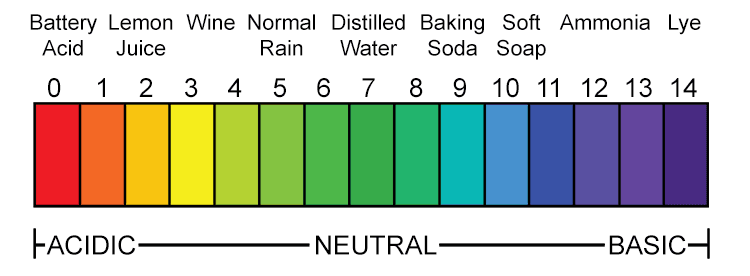
But another way of thinking about the pH scale is in terms of the Power of Hydrogen. On a universal indicator the Power of Hydrogen being very, very few at fourteen, the basic end and many at zero, the acidic end, where acids have lots of H+ ions to give away (see acids, bases and alkalis a short summary).
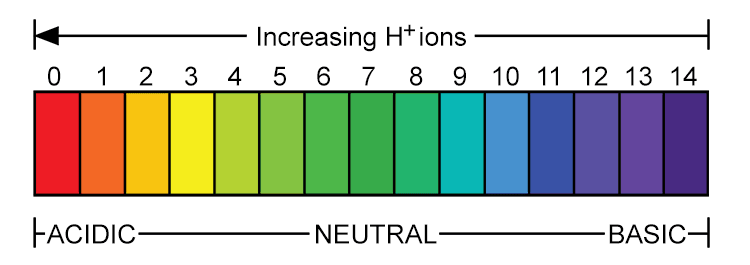
A solution with a pH of 14 has an extremely low concentration of hydrogen ions (H+).
A solution with a pH of 0 has a very high concentration of hydrogen ions (H+).
Although this is a great way to remember that pH means the Power of Hydrogen conversely at fourteen there are many atoms (hydroxide ions OH¯) wanting to accept H+ ions.
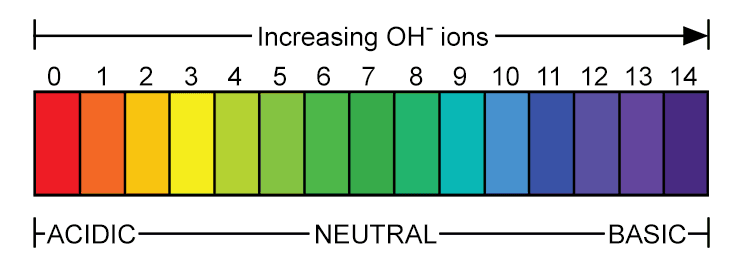
A solution with a pH of 14 has a very high concentration of basic atoms (OH¯ ions) available to accept hydrogen ions (H+ ions).
A solution with a pH of 0 has a very low concentration of available basic atoms (OH¯ ions) available to accept hydrogen ions (H+ ions).
Note: a pH of 7 means a solution is neutral, indicating an equal concentration of hydrogen (H+ ions) and hydroxide (OH¯ ions) which is the same as pure water, making it neither acidic nor basic.