The Power of Mnemonics
Across many studies, scientists, academic professors and mathematicians using statistics have proved that learning by association/mnemonics improves memory and recall.
- Dr Michael M Gruneburg professor at Liverpool and Swansea University was an internationally recognised expert in memory improvement and a past president of the Society of Applied Research in memory and cognition.
Conclusion - Using linkword association is typically three times faster. Ensures durable, long-term retention even after a decade, and is effective across all age groups. - Harry Lorayne was called "The Worlds Foremost Memory Training Specialist" by Times magazine. He appeared in numerous television shows including 24 times on The Johnny Carson Show. His book The Memory Book was a New York Times best seller.
Conclusion - 166 studies in his techniques concluded that these association techniques consistently result in significant long-term retention compared to rote learning. - Gerald A Miller - A foundational figure in techniques using mnemonics. He used modern research on the effect of mnemonics and found that students benefitted from these techniques in the classroom. In 1967 a study conducted by Gerald A Miller revealed that students who used mnemonic devices often increased their test scores, some by more than 75 percent.
Dr Michael M Gruneberg
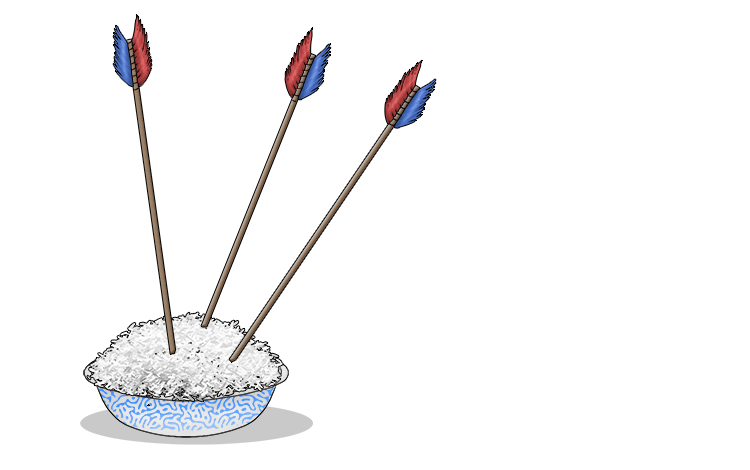
The Spanish word for rice, arroz, one visualises "arrows landing in a bowl of rice".
Harry Lorayne
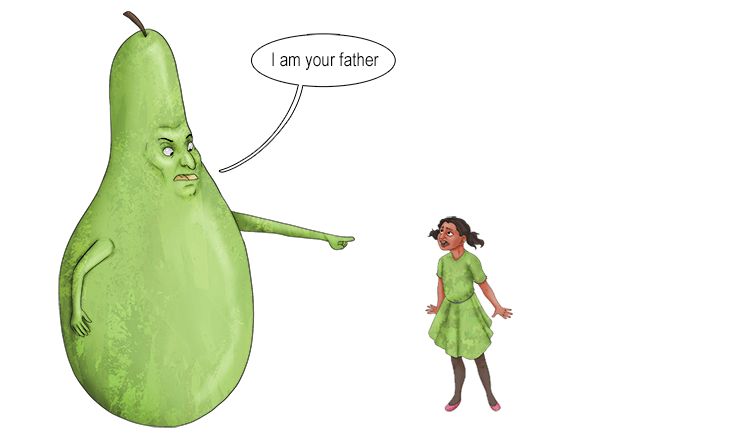
"Père" (French for father) - picture a gigantic "pear" as your father.
George A Miller (1920-2012)
George A Miller was a foundational figure in cognitive psychology whose 1956 paper "The Magic Number Seven Plus or Minus Two: Some Limits on our Capacity for Processing Information", revolutionised the understanding of human memory and directly addressed how techniques like mnemonics can overcome cognitive limitations.

Conclusion: The Power of Mnemonics
Across many studies, scientists, academic professors and mathematicians using statistics have proved that mnemonics improve memory and recall.
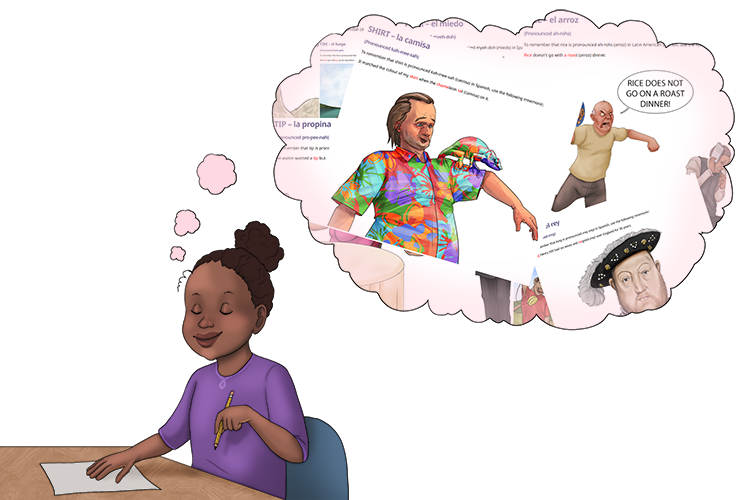
Measuring overall performance they see:
- Short-term tests (recall facts/lists)
30% to 40% improvement. - Long-term retention (after days/weeks)
15% to 30% improvement. - With difficult material
40% to 60% improvement. - With weaker learners
Again, 40% to 60% improvement.
Gains proved to be largest for memorising vocabulary and sequences.
All and we mean all, conclude that:
- Mnemonics improve memory and recall.
- Help with exam performance.
- Increases confidence and engagement.
- Mnemonics are best used alongside normal leaning not instead of it.