coulomb – unit of electrical charge
(pronounced koo-lom)
Note: A coulomb is the equivalent of one ampere flowing for one second.
To remember the meaning of coulomb, use the following mnemonic:
The school served omelettes (coulomb) with an electrical charge flowing through them.

Also, recall the physics electrical formula mnemonic.
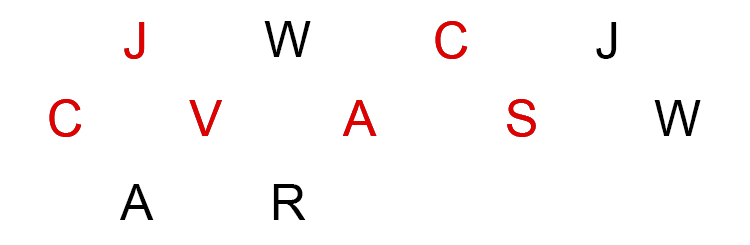
Here you can clearly see that:
`\text{Coulombs (Q)} = \text{Joules (energy)}/\text{Volts (V)}`
`\text{Coulombs (Q)} = \text{Amps (A) x Time (seconds)}`
A coulomb is the unit used to measure electrical charge, represented by the symbol C. One coulomb is defined as the amount of electric charge that flows past a point in a circuit when a current of one ampere flows for one second. In equations coulombs are often symbolised by the letter Q. This relationship is expressed by the equation:
`\text{Charge (Q)} = \text{Current (I - Amps) x Time (t - seconds)}`
Charge is measured in coulombs, current in amperes and time in seconds.
For example, if a current of 2 amperes flows through a circuit for 5 seconds, the total charge that has passed is 10 coulombs.
`\text{Charge} = \text{2A x 5s} = \text{10C}`
A coulomb of charge can also be expressed through the equation:
`\text{Coulombs (charge)} = \text{Joules (energy)}/\text{Volts (potential difference)}`
This equation derives from the definition of potential difference, which is the energy transferred per unit charge and it allows us to calculate how much electrical charge has flowed when we know the energy transferred and the voltage. For example, if a battery transfers 120 joules of energy when moving a charge through a potential difference of 6 volts, we can calculate the charge transferred using:
`\text{Coulombs (charge)} = \text{120 joules}/\text{6 volts}`
This is equal to 20 coulombs
The coulomb is used to quantify both the total amount of charge stored in a device like a capacitor and the amount of charge transferred in electrical circuits.