Elastic limit – the force beyond which an object will no longer deform elastically, and will instead deform plastically
Note: an object deformed elastically will return to its original shape; an object deformed plastically won't.
To remember the meaning of Elastic limit, use the following mnemonic:
The elastic band was stretched to its limit (elastic limit), any more force will permanently change it.
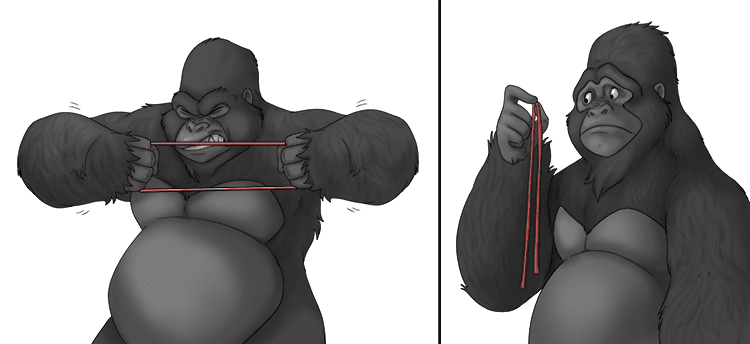
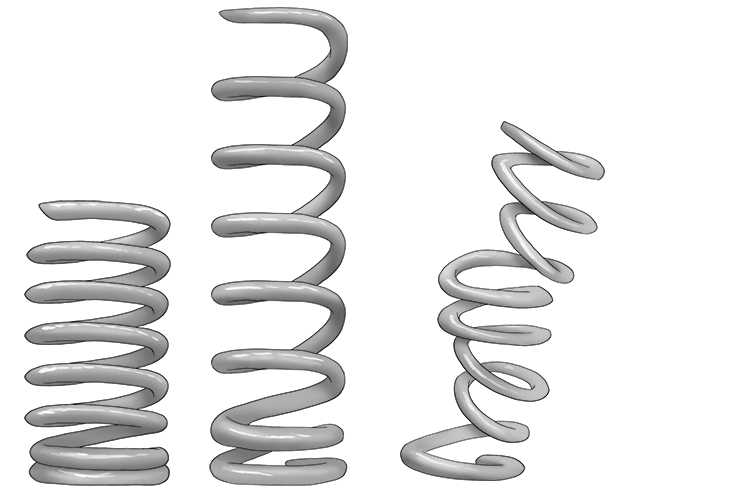
The elastic limit is the maximum amount of force or stress that can be applied to an object or material before it becomes permanently deformed and loses its ability to return to its original shape when the force is removed. When a material is stretched, compressed, or bent within its elastic limit, it behaves elastically, meaning it will spring back to its original dimensions once the applied force is removed, with extension being directly proportional to the applied force. However, if the force exceeds the elastic limit, the material enters plastic deformation region where the atomic bonds within the material are permanently rearranged, causing irreversible changes in shape and size after the force is removed. This can be seen when a spring is stretched too far.
Understanding the elastic limit is essential for ensuring that structures and components can withstand expected stress and forces without permanent damage.