frequency (transverse wave) – the number of peaks or troughs that pass a point every second
Note: Frequency is measured in hertz (Hz).
Note: Transverse waves think rope moved up and down.
To remember the meaning of frequency in transverse waves, use the following visual mnemonic:
We know what a transverse wave is and can be shown in the diagram below by moving a rope up and down one end.
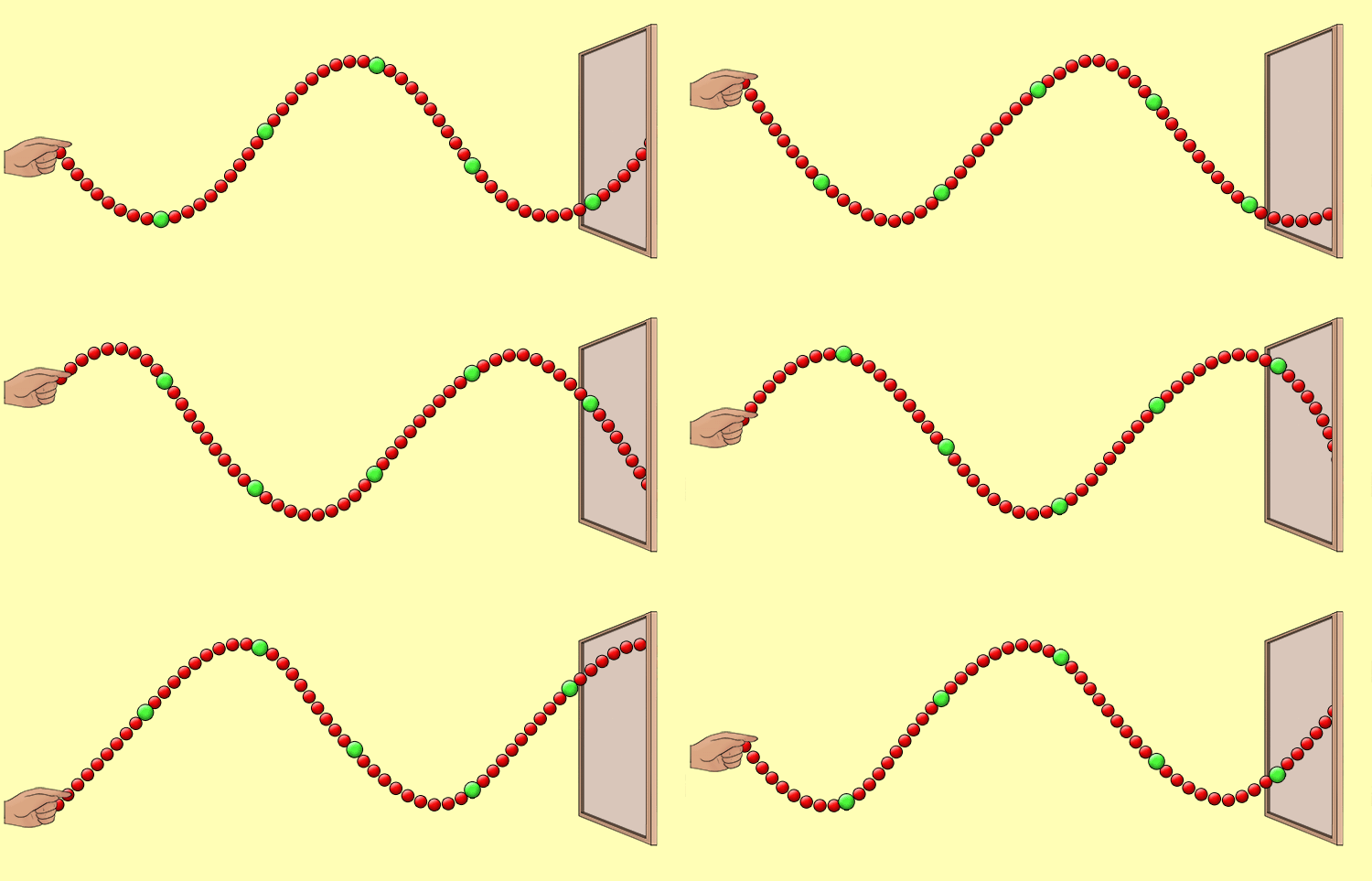
If you mark a point on this diagram and count how many crests pass this point every second or alternatively count how many troughs pass this point every second this would be the frequency. A higher frequency or cycles that pass every second means more rapid oscillations.
Frequency is measured in hertz where 1 Hz = cycle per second.
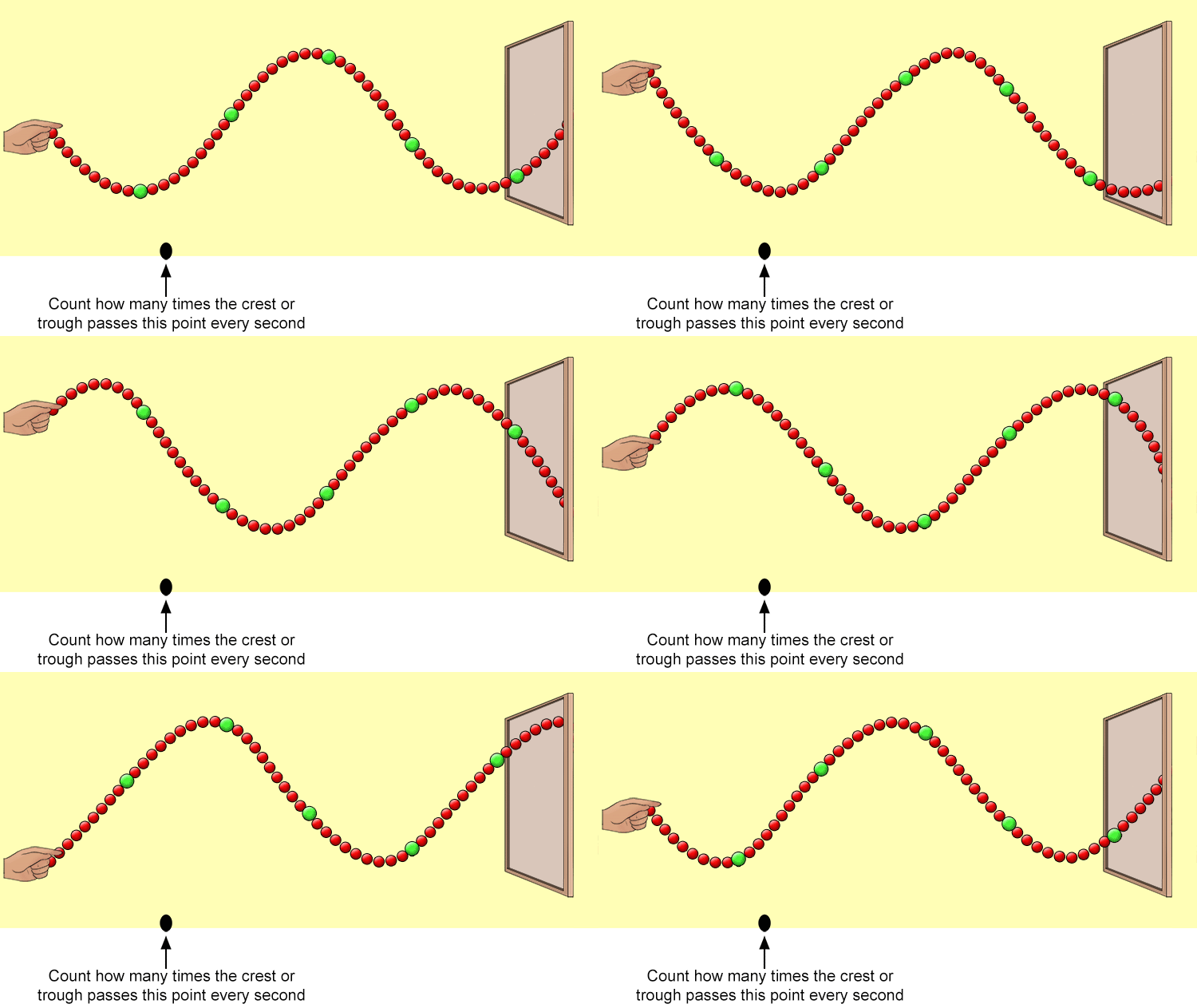
For example, a wave with a frequency of 50Hz completes 50 full oscillations per second, while a wave frequency of 5Hz completes only 5 oscillations in the same time.
The speed of the wave is how frequently the wave passes a point and how long the wave is.
Speed of wave = frequency x wavelength
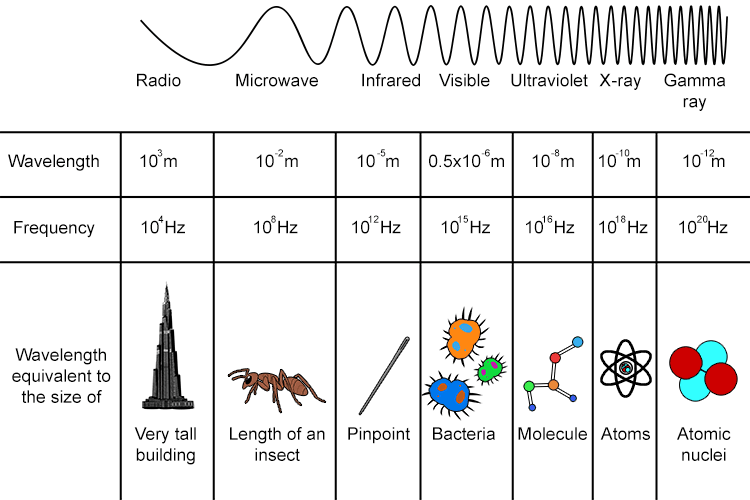
Frequency relates to the electromagnetic spectrum because the radiation it gives off are all transverse waves.
Also all electromagnetic radiation travels at the speed of light and speed of light is a constant.
Speed of light (constant) = frequency x wavelength
So in the electromagnetic spectrum if you have an electromagnetic wave which is small the frequency it passes a point increases.
Small wavelength is large frequency
Large wavelength is small frequency