fulcrum – the fixed point around which a lever rotates, balances, or turns
(pronounced ful-crum)
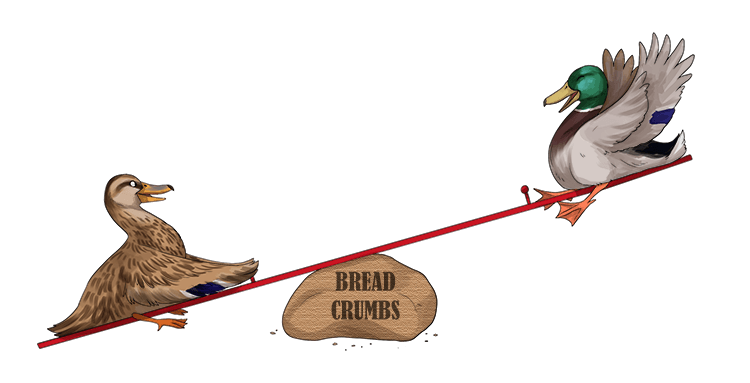
To remember the meaning of fulcrum, use the following mnemonic:
The bag full of crumbs (ful-crum) was used so they could play seesaws. They finally had a balancing point.
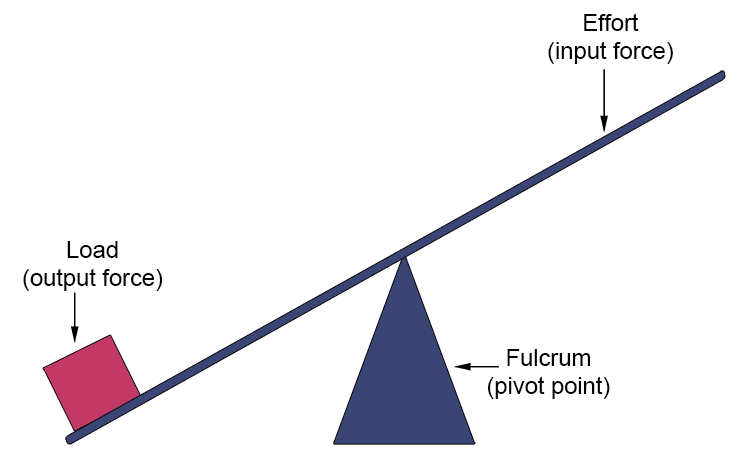
A fulcrum is the fixed pivot point or support around which a lever rotates when force is applied, and it is one of the three essential components of a lever system along with the effort (input force) and the load (output force of resistance).
The position of the fulcrum relative to the effort and the load determines the mechanical advantage of the lever. In a first class lever, such as a seesaw, the fulcrum is positioned in the middle, between the effort and the load.
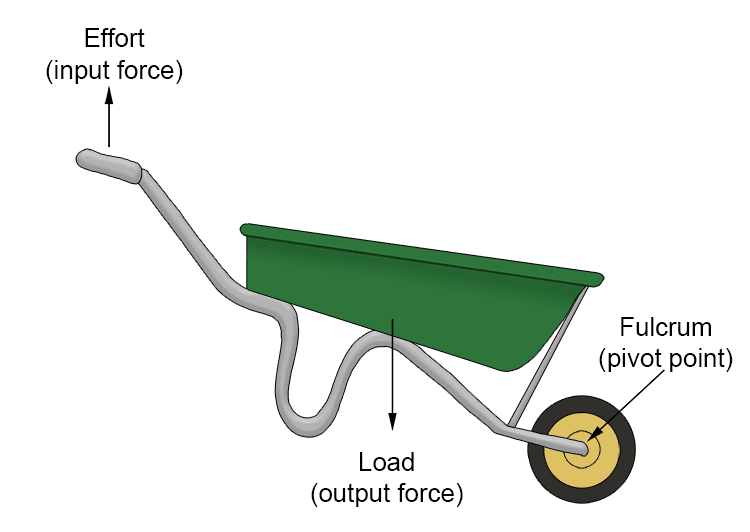
In a second class lever, like a wheelbarrow, the fulcrum is located at one end of the lever arm, with the load between the fulcrum and the effort.
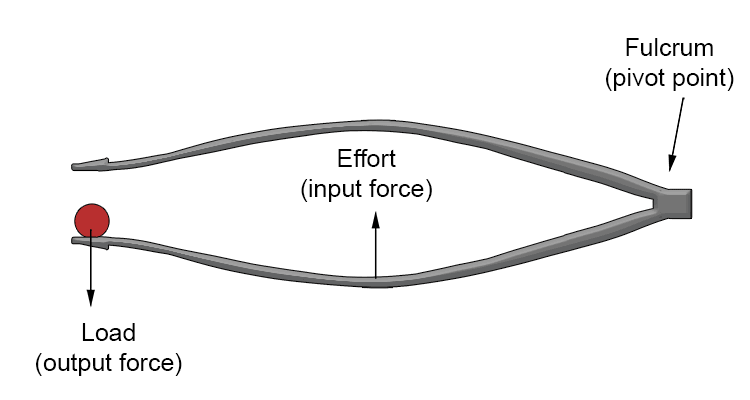
Finally, in a third class lever, such as tweezers the effort is applied between the fulcrum and the load.
The principle of moments states that for a lever in an equilibrium, the clockwise moment about the fulcrum equals the anticlockwise moment, where moment is calculated as force multiplied by perpendicular distance from the fulcrum. By adjusting the position of the fulcrum or the distances of the effort and load from it, levers can be used to multiply force, increase speed, or change direction of motion, making the fulcrum a crucial concept in understanding mechanical advantage.