natural satellites – an object in orbit around a planet rather than a star and not in orbit due to mankind. Our moon is a natural satellite
Note: Natural satellites as opposed to artificial satellites
To remember the meaning of natural satellites, use the following mnemonic:
A natural object that has sat in Earth's orbit for millions of years and lights (natural satellite) our way at night is the moon.
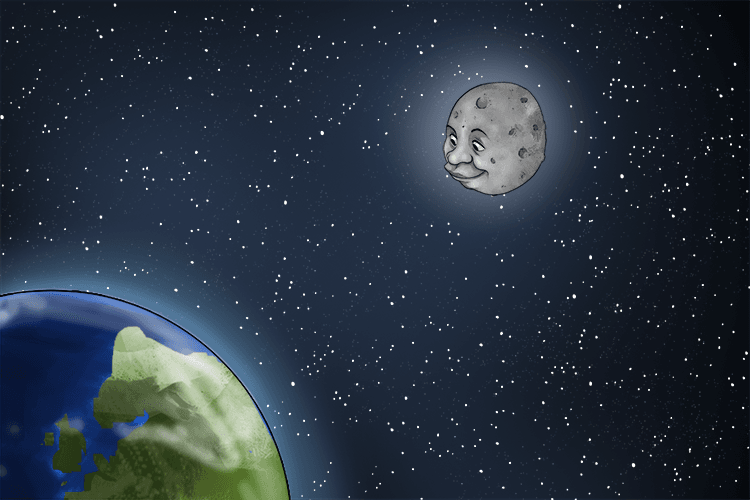
A natural satellite is a celestial body (object in space) that orbits a planet or other larger astronomical object due to gravitational attraction, with our moon being the most familiar example of Earth's only natural satellite.
Artificial satellites are human-made objects launched into space whereas natural satellites are formed through natural processes.
Natural satellites can form in different ways:
The Earth's moon was created by a giant impact. A large object roughly the size of Mars struck the early Earth, ejecting massive amounts of molten and vaporised material into space. This debris formed a disk around the Earth, which eventually coalesced to form the moon.
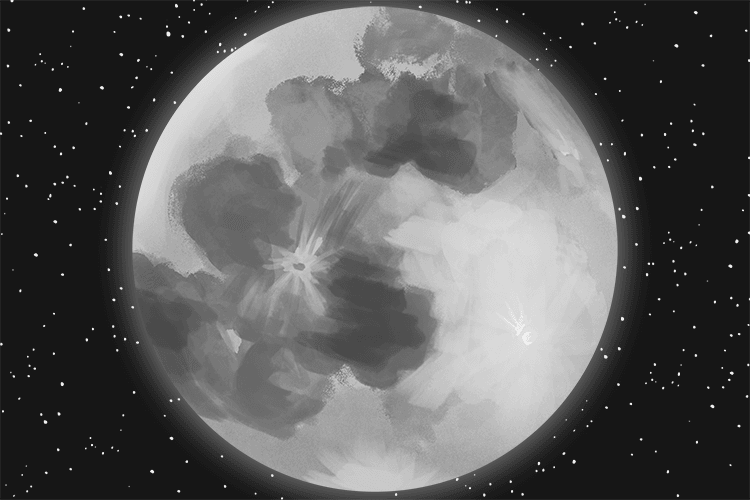
Jupiter, Saturn, Uranus and Neptune all have natural satellites which have formed alongside their parent planet from the same cloud of gas and dust being captured by a planets gravitational field. These coalesce into moons.
A planet's gravity can capture a passing object, such as an asteroid or comet.
Moons (natural satellites) are mainly made from rock, metal and/or ice.
Earth's moon is mainly rock with a small metal core. Saturn's moon, Enceladus is made of ice. Some small moons are just collections of rock held together by gravity.
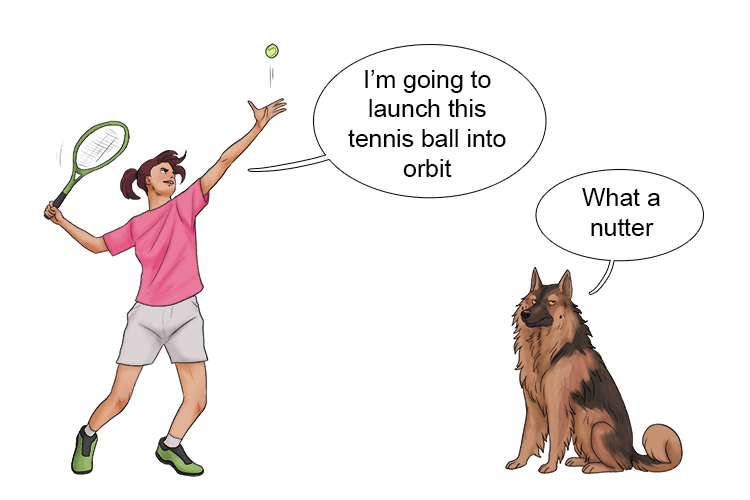
Can natural satellites be smaller than a tennis ball? No! A natural satellite has to be large enough for gravity to pull it into orbit around a planet. A tennis ball sized piece of rock would have next to no gravity and would be easily knocked off course by tiny forces like radiation from the sun.
Natural satellites vary enormously in size ranging from just a few kilometres across to massive moons.
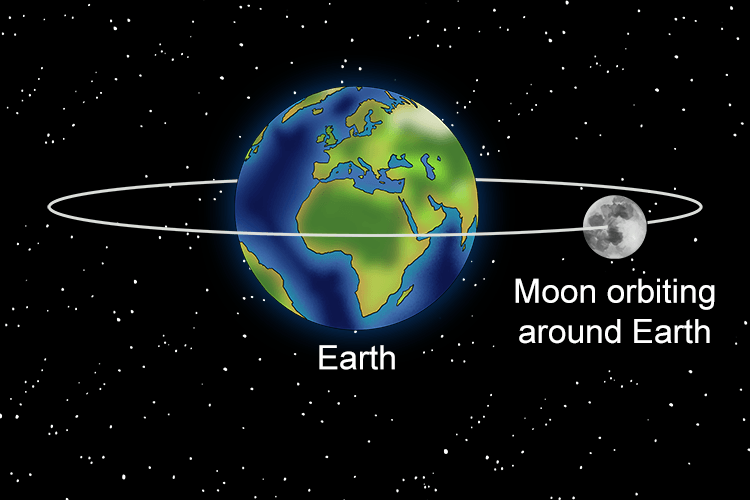
Moons are held in orbit by the gravitational pull of their parent planet, following elliptical or nearly circular paths as they balance the inward gravitational force with their orbital motion.
Natural satellites play important roles in planetary systems, for example, Earth's moon creates ocean tides through its gravitational influence, stabilising Earth's axial tilt to maintain relatively stable climates and gradually slowing Earth's rotation over millions of years.