parallel circuit – circuit where components are on separate branches, creating multiple paths for the current
(pronounced pa-ruh-lel)
Components (or resistance) in parallel is obviously built as follows:
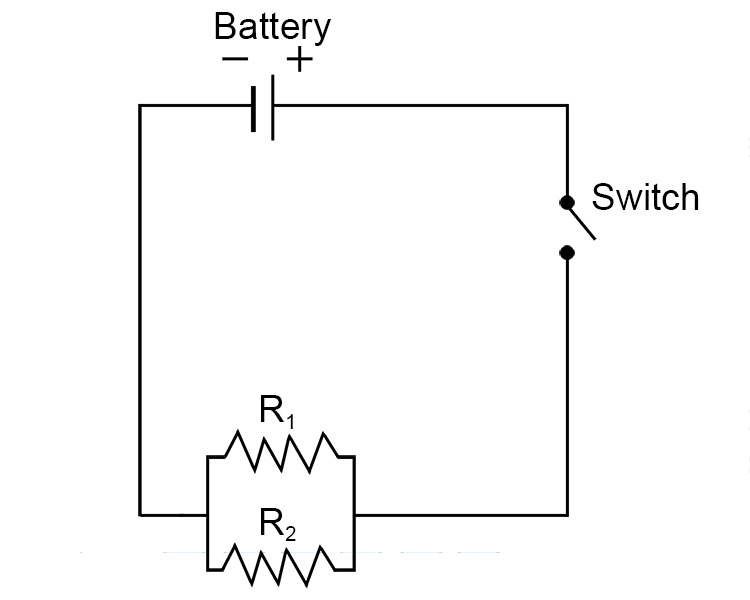
To remember the formula for resistance in parallel use the following mnemonic:
Think of a man on parallel bars.
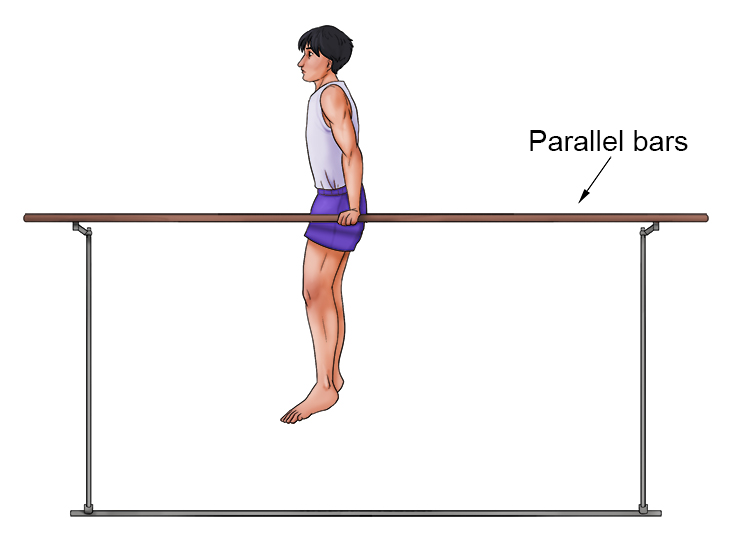
But think of that man being a number 1 instead.
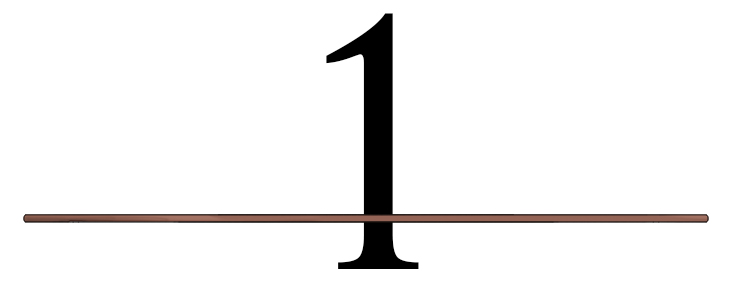
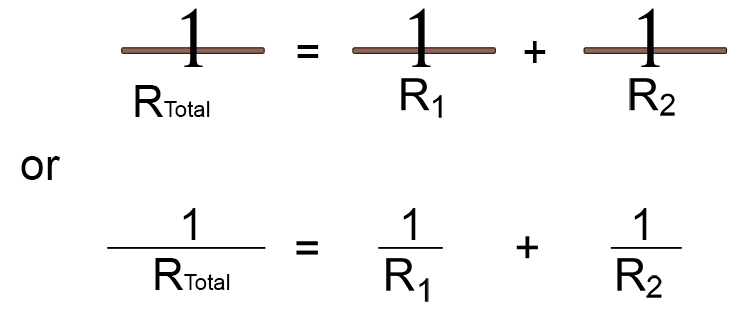
This should remind you that the formula for resistance in parallel is:
A water analogy would be as follows:
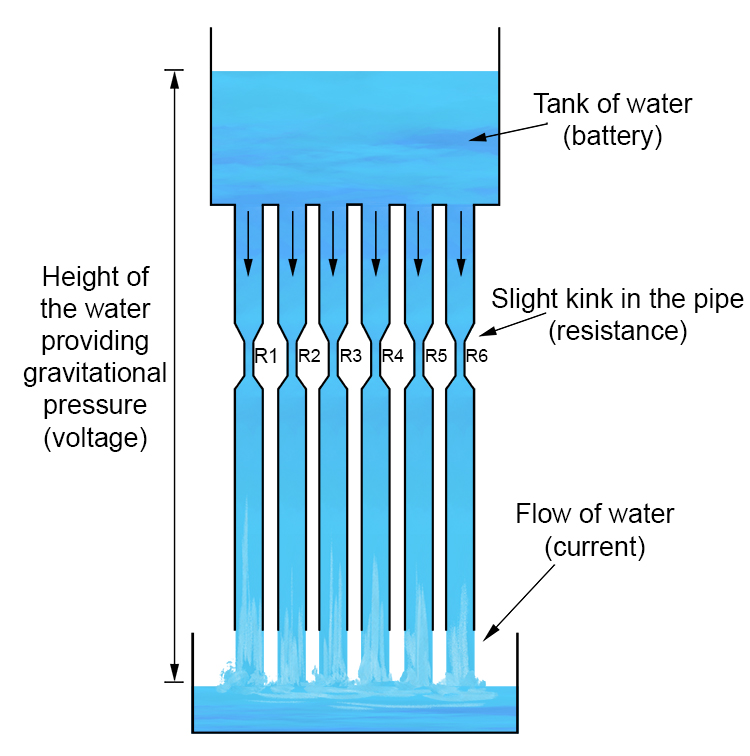
Here you can see the total voltage is the same across all components; every component gets the full maximum voltage. Therefore bulbs in parallel have the same brightness. The header tank of water gets used up quicker (so the current increases) and the battery is used up quicker.
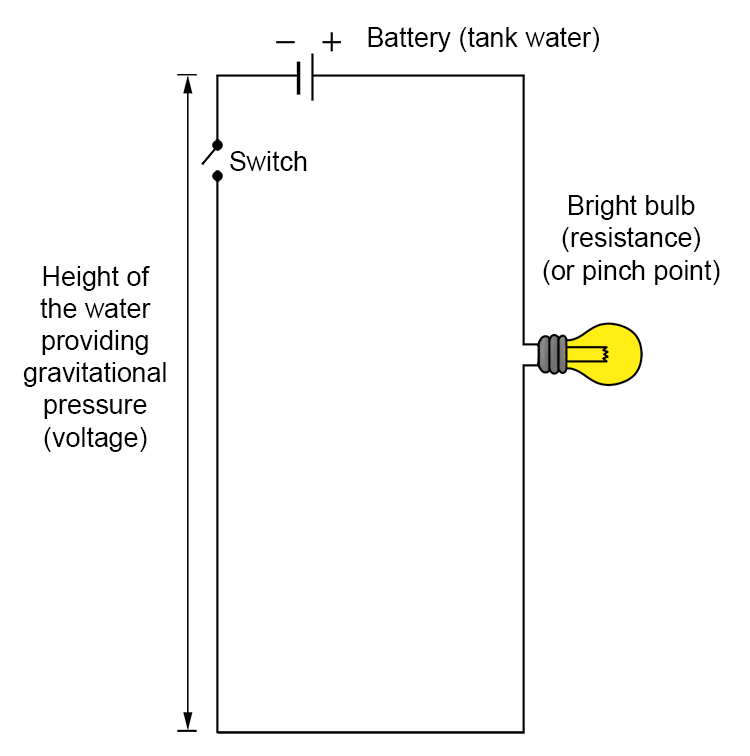
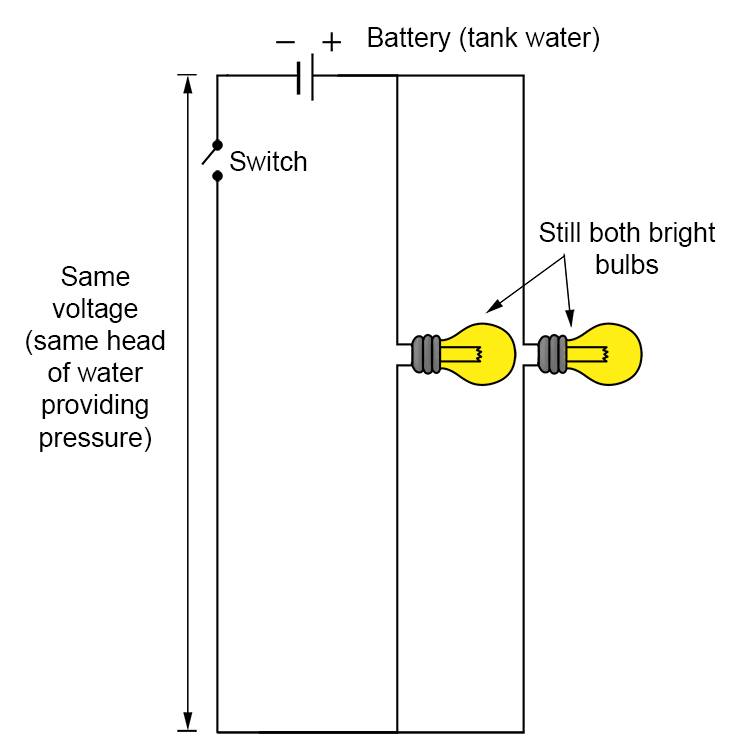
A parallel circuit is a type of electrical circuit where components are connected across the same two points, creating multiple pathways for the electric current to flow. Unlike a series circuit where there is only one path, in a parallel circuit the current splits at junctions and flows through different branches simultaneously before recombining. Each component in a parallel circuit has the same potential different (voltage) across it, which is equal to the voltage of the power supply. However, the current is divided between the branches, with the total current being the sum of the currents on each branch:
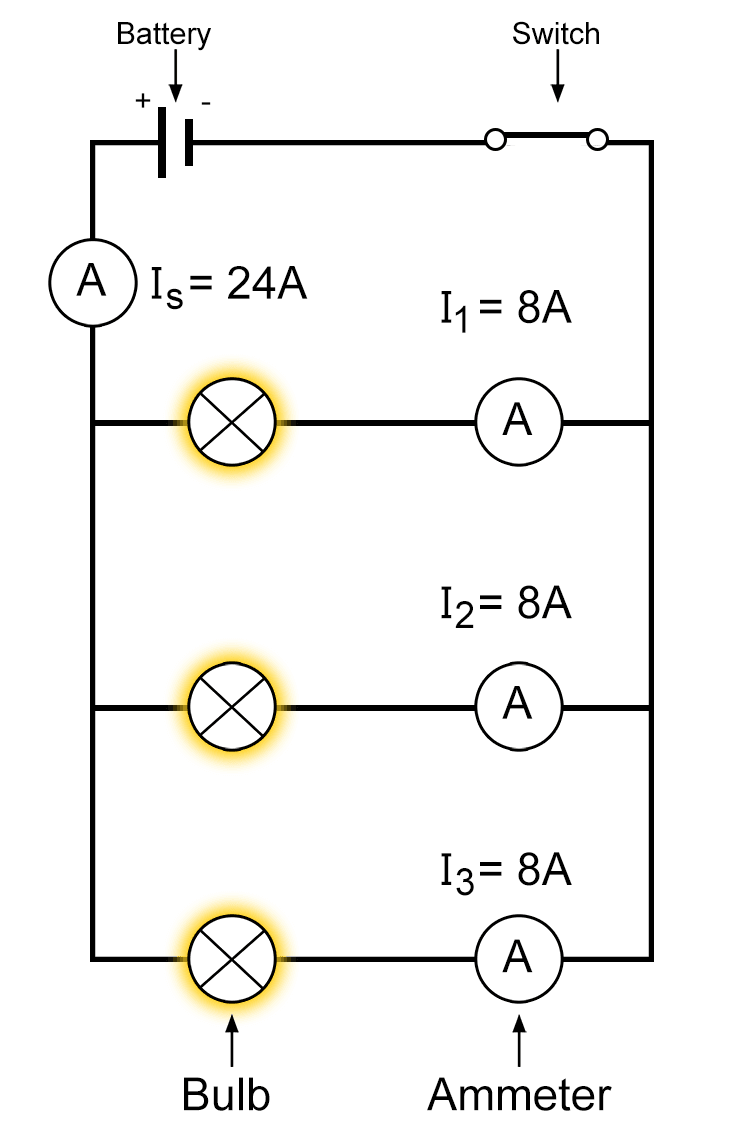
One key advantage of parallel circuits is that if one component fails or is removed, the others continue to work because each has it's own independent path to the power supply. This is why parallel circuits are often used in household lighting and electrical systems - when one light bulb breaks, the others remain lit.