alveolus – a tiny air sac within the lung involved in gas exchange
(Pronounced al-vee-oh-lus)
To remember the meaning of alveolus, use the following mnemonic:
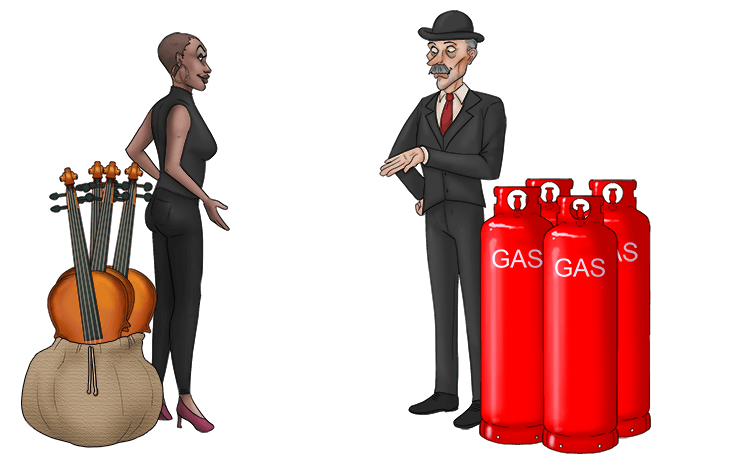
All the violas (alveolus) were in a sack (sac) and I exchanged them for gas (gas exchange) bottles.
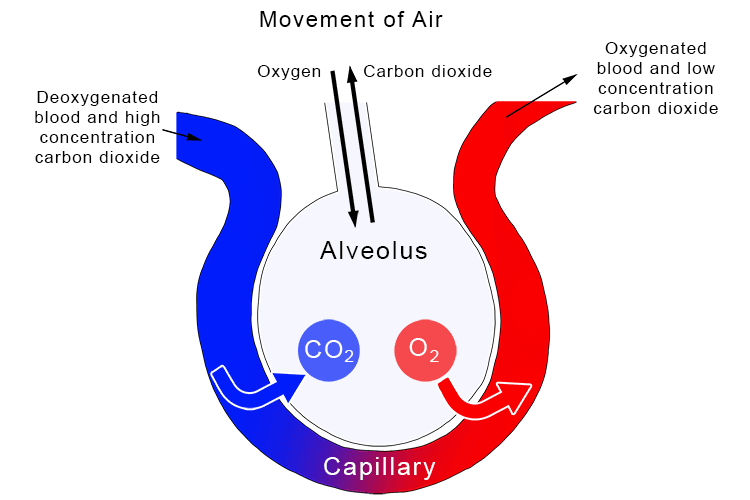
An alveolus (plural: alveoli) is a tiny, balloon-like air sac found at the end of the smallest airways (bronchioles) in the lungs, where gas exchange between air and blood takes place. Each lung contains millions of alveoli, which are clustered together like grapes and surrounded by a dense network of capillaries (tiny blood vessels). The alveoli have extremely thin walls, only one cell thick, which allowed oxygen to pass easily between the air in the lungs and the blood in the capillaries through a process called diffusion. The inner surface of the alveolus is coated with a thin layer of moisture, which prevents the alveoli from collapsing and reduces surface tension.
The large number of alveoli provide an enormous amount of surface area for gas exchange - approximately 70 square metres in adult human lungs - which is the reason gas exchange is so efficient.