anatomy – the study of the structure and physical parts of organisms
Note: Anatomy focuses on the size, shape and the location of the body structures in living organisms where as physiology is the study of how these parts work.
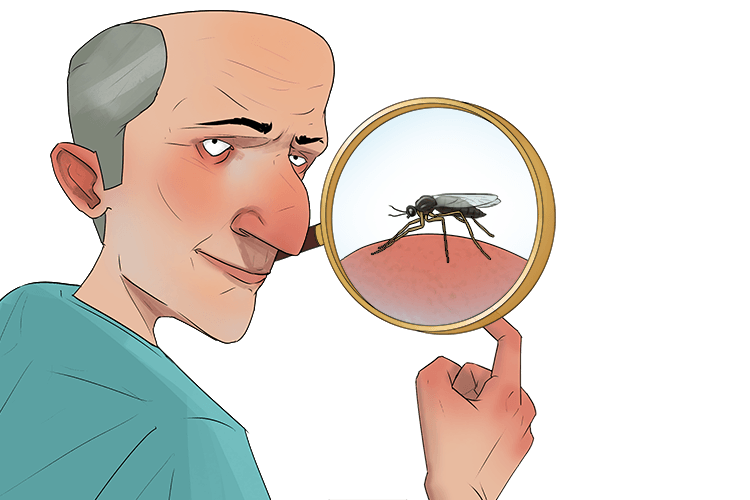
To remember the meaning of anatomy, use the following mnemonic:
I saw a gnat on me (anatomy) and studied its physical structures.
Anatomy is the branch of biology that studies the physical structure of living organisms, from the cellular level up to complete body systems. It involves examining how different parts of an organism are arranged, shaped, and connected to form a functional whole. In human anatomy, this includes studying the structure of organs like the heart, lungs, and brain, as well as understanding how tissues are organised and how body systems like the circulatory, respiratory, and nervous system are constructed.
Plant anatomy focuses on structures like roots, stems, leaves, and flowers, examining how these parts are organised to carry out functions like photosynthesis, transport, and reproduction.
Anatomy can be studied at different levels of detail, from gross anatomy (visible structures that can be seen with the naked eye) to microscopic anatomy (cellular and tissue structures only visible under a microscope).
Understanding anatomy is fundamental to biology because structure and functions are closely related - the way an organ or body part is built directly relates to how it works. For example, the branching structure of the lungs maximises surface area for gas exchange, and the streamlined shape of fish reduces water resistance for efficient swimming. Anatomy provides the foundation for understanding physiology, which is how these structures actually work.