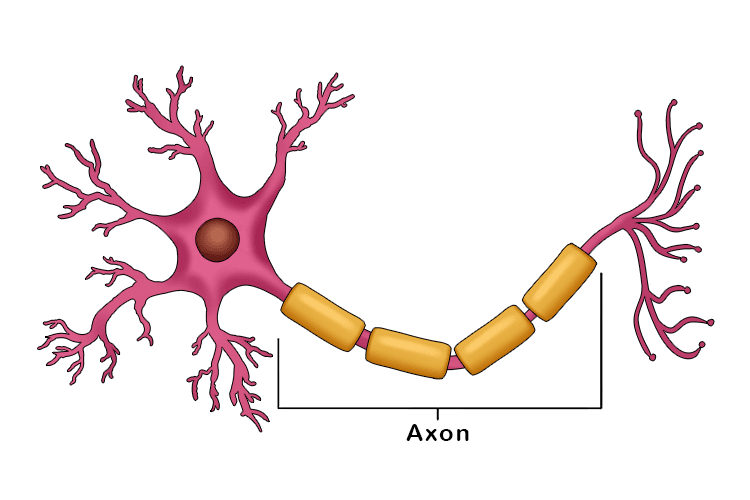
axon – the long threadlike portion of the nerve cell that transmits electrical signals
(Pronounced aks-on)
To remember the meaning of axon, use the following mnemonic:
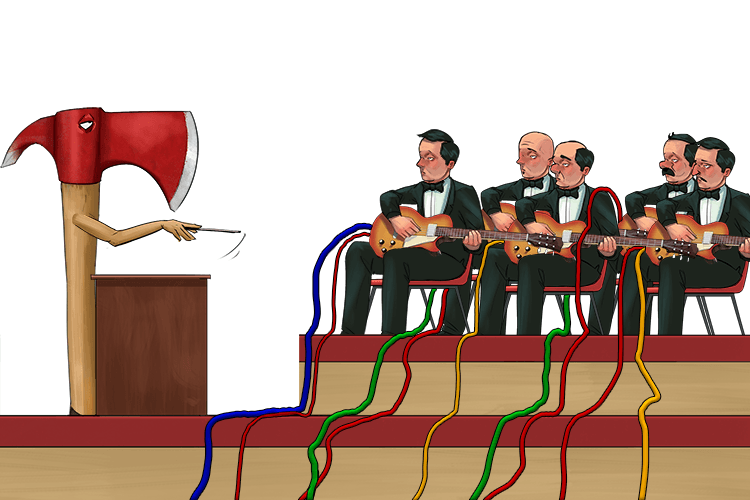
There was an axe on (axon) stage conducting an electric guitar orchestra. There were cables everywhere.
An axon is a long, slender projection of a nerve cell (neuron) that carries electrical impulses away from the cell body to other neurons, muscles, or glands. It acts like an electrical cable, transmitting signals over distances that can range from less than a millimetre to over a meter in length, such as the axons that run from the spinal cord to the muscles in the feet.
The axon is covered by a fatty insulating layer called the myelin sheath, which speeds up the transmission of nerve impulses and prevents electrical signals from leaking out. At the end of the axon are terminal branches that form synapses with target cells, where chemical messengers called neurotransmitters are released to pass the signal on. The axon is essential for communication within the nervous system, allowing the brain to send commands to muscles for movement, receive sensory information from around the body, and coordinate complex processes like reflexes. Without functioning axons, nerve signals cannot travel properly, leading to paralysis or loss of sensation.