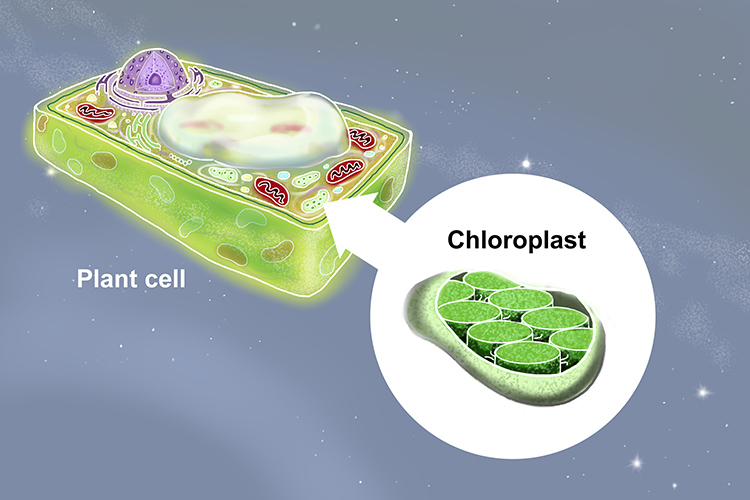
chloroplast – specialised organelle found in plant cells that are responsible for photosynthesis
(Pronounced klaw-ruh-plast)
To remember the meaning of chloroplast, use the following mnemonic:
I clawed a plaster (chloroplast) off in my cell, and the doctor took a photo (photosynthesis) of the wound.

Chloroplasts are specialised organelles found only in plant cells and some algae that are responsible for carrying out photosynthesis, the process by which plants convert light energy into chemical energy (glucose). These disc-shaped organelles contain the green pigment chlorophyll, which captures light energy and gives plants their characteristic green colour.
Each plant cell typically contains many chloroplasts, and their number can vary depending on the cells location and function, with leaf cells generally containing the most. The ability of chloroplasts to capture solar energy and convert carbon dioxide and water into glucose makes them essential for plant survival, which is turn forms the foundation of most food chains on earth.