excretion – the process of removing waste substances of metabolic reactions from the body
(Pronounced ek-skree-shun)
To remember the meaning of excretion, use the following mnemonic:
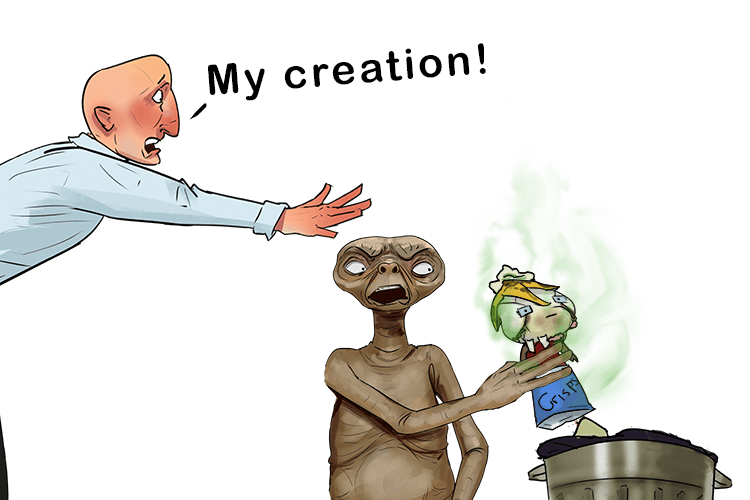
E.T the extra-terrestrial took my creation (excretion) made of household waste and removed it.
Excretion is the process by which living organisms remove toxic waste products that are produced by their metabolic processes. These waste products are harmful if they accumulate in the body and must be removed to maintain healthy cellular function. In humans and other mammals, the main waste products include carbon dioxide (removed through the lungs during breathing), urea (a nitrogen-containing waste from protein breakdown, removed by the kidneys in urine), and water and salt (also removed through kidneys, skin via sweating, and lungs). Plants excrete oxygen as a waste product of photosynthesis through their leaves and also remove other waste substances through leaf fall and storage in vacuoles.
The process of excretion is different from egestion, which is the removal of undigested food materials that were never actually inside the body's cells.
Excretion is also essential for homeostasis as it helps maintain the correct balance of water, salts, and pH in the body, and prevents the build up of toxic substances that could damage cells and organs.