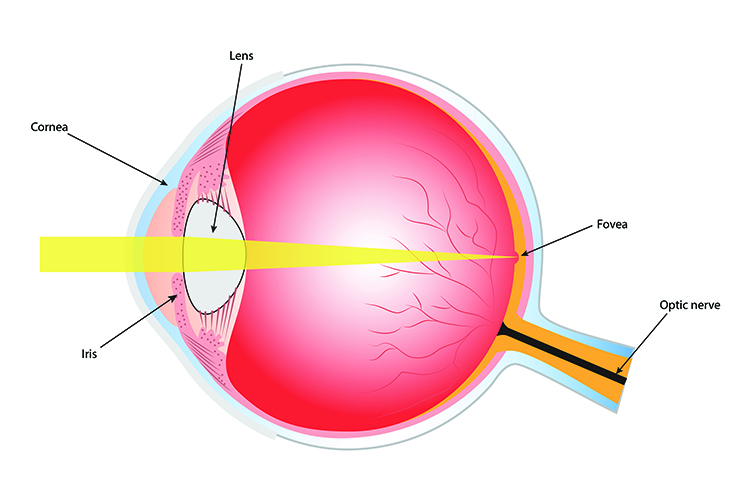
fovea – pit in the centre of the retina responsible for sharp, central vision
(Pronounced foh-vee-uh)
Note: The fovea is densely packed with cones.
To remember the meaning of fovea, use the following mnemonic:
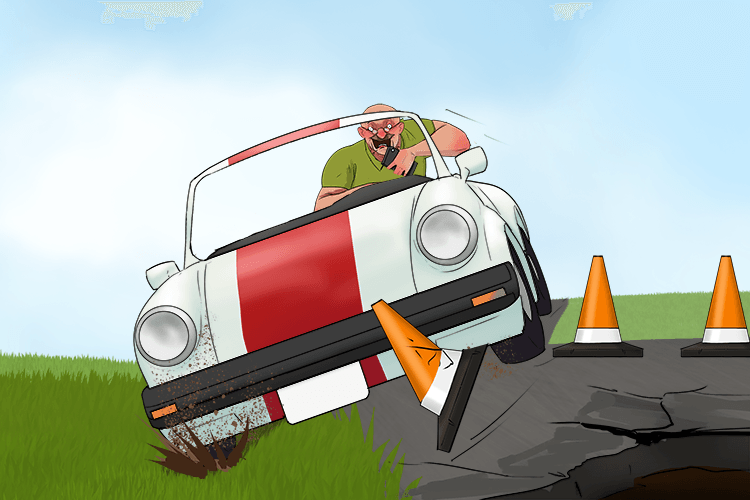
Distracted by his phone, he veered (fovea) sharply to avoid the pit because he didn't see the warning cones.
Throughout most of the retina, the density of rods is much greater than cones. However, this changes in the fovea, a region of the central retina that measures about 1.2 millimetres in diameter. Here, cone density increases nearly 200 times, reaching, at its centre, the highest receptor packing density anywhere in the retina.
The high density is achieved by decreasing the diameter of the cones’ outer segments so that foveal cones actually look like rods. The increased density of cones in the fovea is accompanied by a steep decline in the density of rods. In fact, the central part of the fovea, called the foveola, is rod-free.
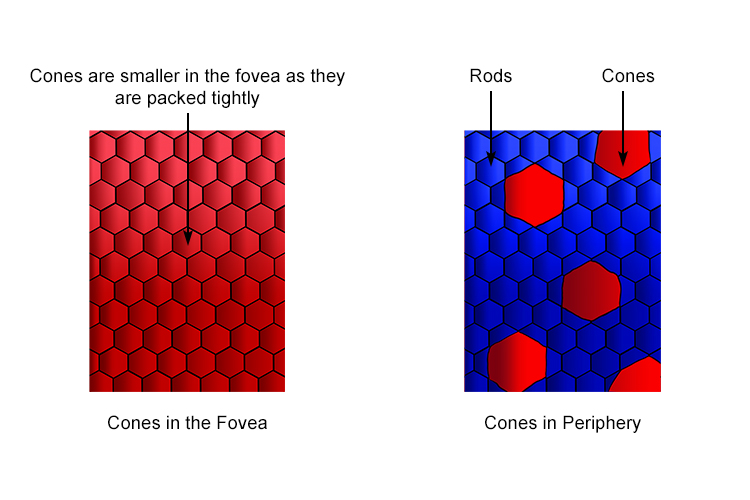
The picture on the left shows the high density of cones in the fovea. The picture on the right shows cones in the periphery (close to the edge) of the retina, greatly outnumbered by the rods in between.
NOTE:
Cones in the fovea are narrower than those in other regions of the retina so that they can be packed in more tightly for sharp vision; they are so narrow they look like the rods that you see between the cones in the picture on the right.