intercostal muscles – set of muscles between the ribs that facilitate breathing
(Pronounced in-tuh-cos-tuhl)
To remember the meaning of intercostal muscles, use the following mnemonic:
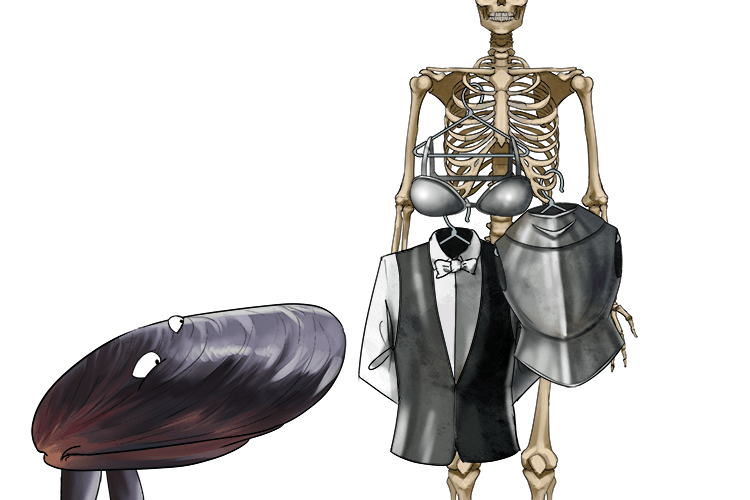
The mussel (muscle) was into costumes made of metal (intercostal) and hangs them all between the ribs of his skeleton in the room.
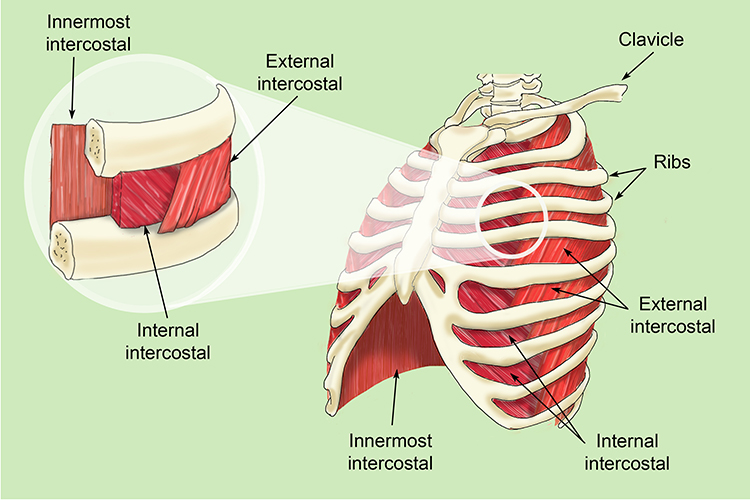
The intercostal muscles are thin layers of muscle tissue located between the ribs that play an important role in the breathing process. There are two main types: the external intercostal muscles, which run diagonally downwards and forward between adjacent ribs, and the internal intercostal muscles, which run diagonally downward and backward. During inhalation (breathing in), the external intercostal muscles contract to lift and expand the rib cage outward and upward, increasing the volume of the thoracic cavity and helping to draw air into the lungs. During forced expiration (breathing out), the internal intercostal muscles contract to pull the ribs downward and inward, decreasing the thoracic cavity volume and helping push air out of the lungs.
The intercostal muscles work in coordination with the diaphragm to create the pressure changes necessary for ventilation, and they are particularly important during exercise or when deeper breathing is required. These muscles also help maintain the structural integrity of the chest wall and assist with other activities that require changes in thoracic pressure, such as coughing or speaking.