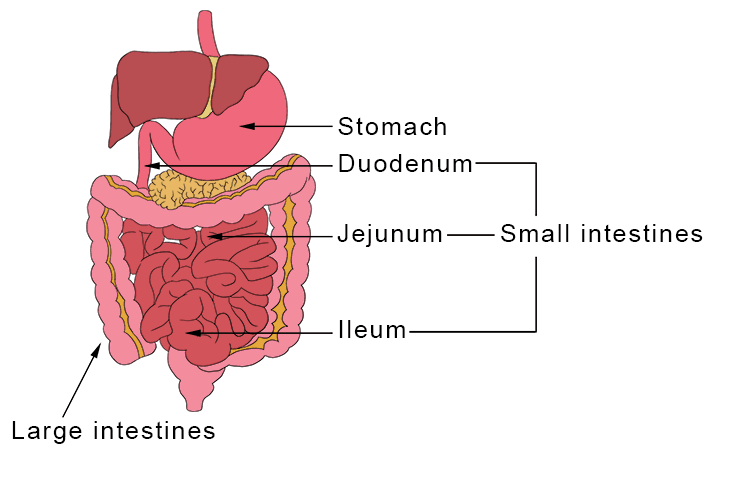
intestines – long, tube shaped organs in the lower part of the digestive system
(Pronounced in-test-tin)
(Note: The intestines consist of the large and small intestine).
To remember the meaning of intestines, use the following mnemonic:
In the medical test, they found a tin (intestine) of beans in my tube shaped digestive organs.

After the stomach the small intestine is the first organ food travels to, where most digestion and nutrient absorption happen, before moving on to the large intestine (colon) to absorb water and form waste.
The intestines are a long, coiled tube that forms a major part of the digestive system, divided into two main sections: the small intestine and the large intestine (colon). The small intestine, which is about 6-7 meters long, is where most digestion and absorption of nutrients occurs, with it's inner surface covered in tiny, finger-like projections called villi that increase the surface area for maximum nutrient absorption. It consists of three parts: the duodenum (where bile and pancreatic enzymes are added), jejunum and ileum. The large intestine is shorter (1.5 meters long) but wider, and it's primary functions include absorbing water and electrolytes from the remaining indigestible food matter and forming faeces for removal.
The large intestine also houses beneficial bacteria that help break down some remaining nutrients and produce certain vitamins like vitamin K.
Together, the intestines complete the digestive process by extracting water from food and are essential for maintaining proper nutrition and hydration in the body.