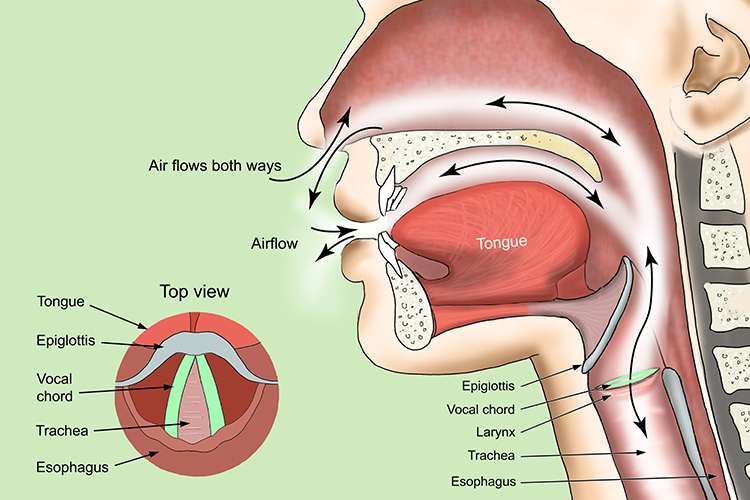
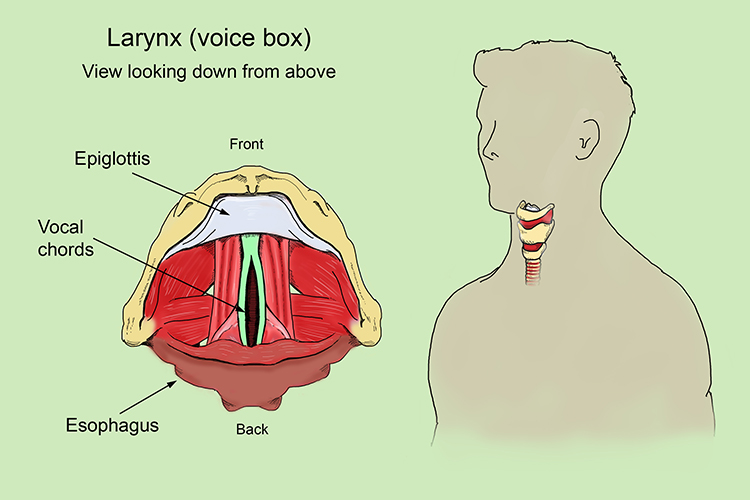
larynx – a hollow structure in the throat that forms an air passage to the lungs and holds the vocal chords; the voice box
(Pronounced la-rinks)
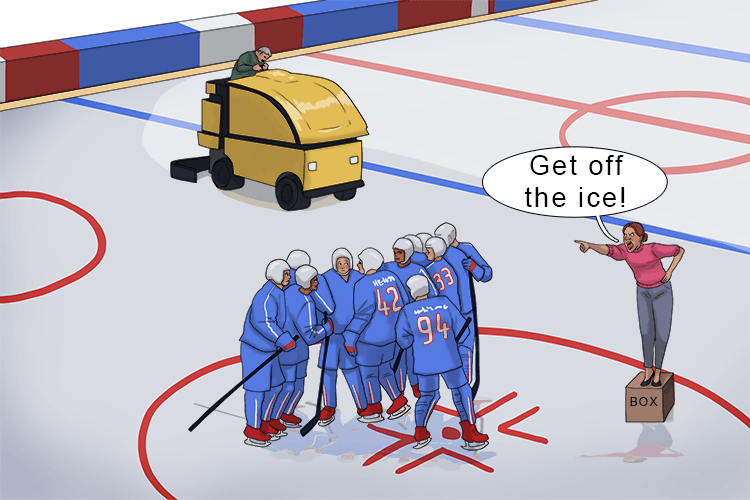
To remember the meaning of larynx, use the following mnemonic:
The French ice hockey team stood on La Rink (larynx) and were told by a woman with a loud voice standing on a box (voice box) to, “Get off the ice!” so it could be cleaned.
The larynx, commonly known as the voice box, is a structure located in the upper part of the respiratory system, positioned between the throat and the trachea (windpipe) and is constructed of cartilage.
The primary function of the larynx is to produce sound for speech and communication through the vibration of the vocal chords, which are two bands of muscle and tissue that stretch across the larynx opening. When air from the lungs passes through the vocal chords, they vibrate to create sound waves, and the pitch can be controlled by adjusting the tension and length of the vocal chords.
The larynx also plays a crucial role in protecting the respiratory system by acting as a valve during swallowing. The epiglottis, a flap of cartilage attached to the larynx, covers the opening to prevent food and liquids from entering the trachea and lungs. Additionally, the larynx helps regulate airflow during breathing and can produce protective reflexes like coughing when irritants are detected.