mitosis – process of cell division which produces two identical cells for growth and repair
(Pronounced my-toh-sis)
To remember the meaning of mitosis, use the following mnemonic:
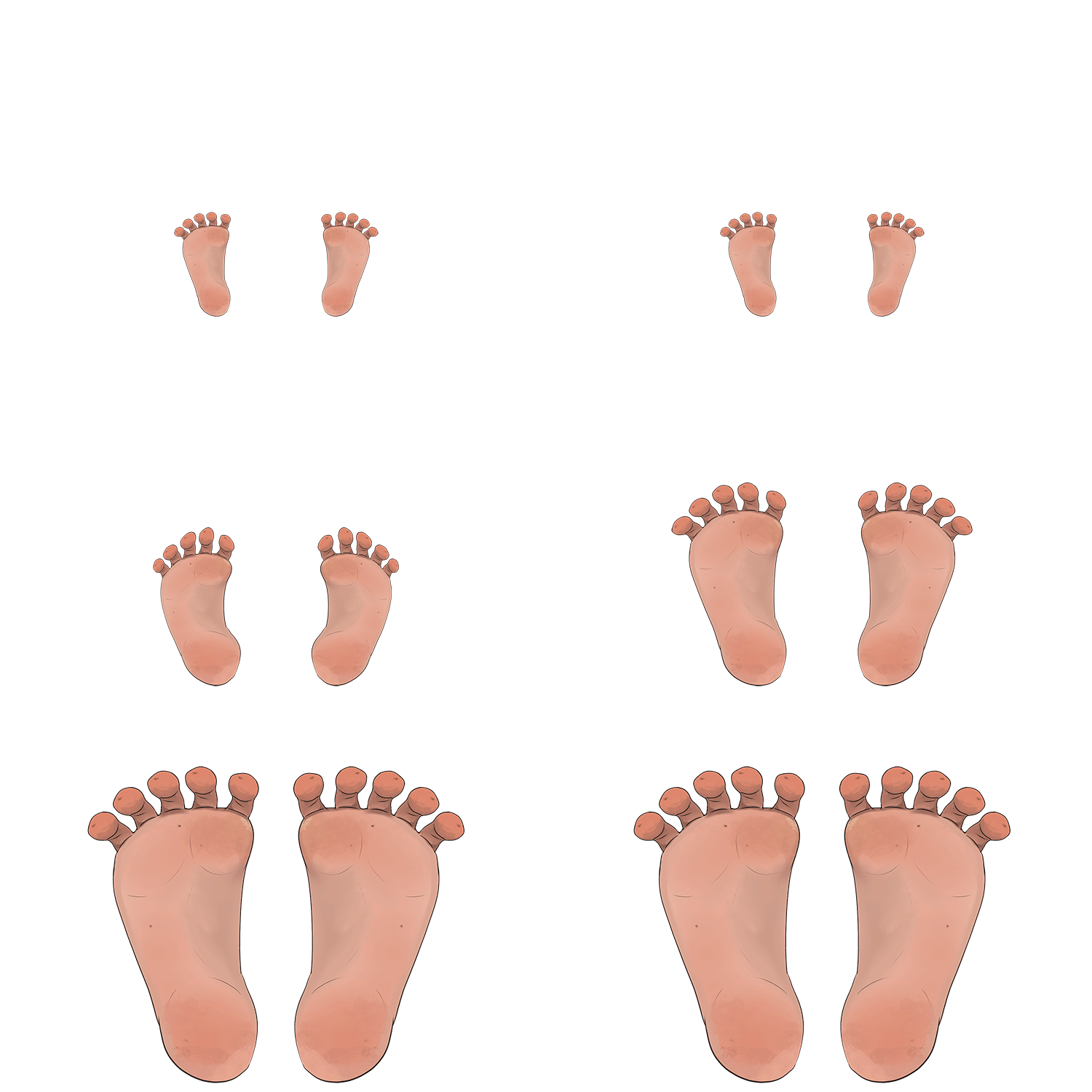
My toesies (mitosis) show that I have identical toes, but my two feet grow each year (produces two cells for growth).
Mitosis is a type of cell division that produces two identical cells from a single cell. It is used for growth, repair and asexual reproduction in organisms.
During mitosis, the cell first copies all of its DNA so that each chromosome is duplicated, then the chromosomes line up in the middle of the cell before being pulled apart to opposite ends. The cell then divides into two, with each new cell receiving an exact copy of the genetic material. This means both cells are genetically identical to each other and to the original parent cell, containing the same number of chromosomes.
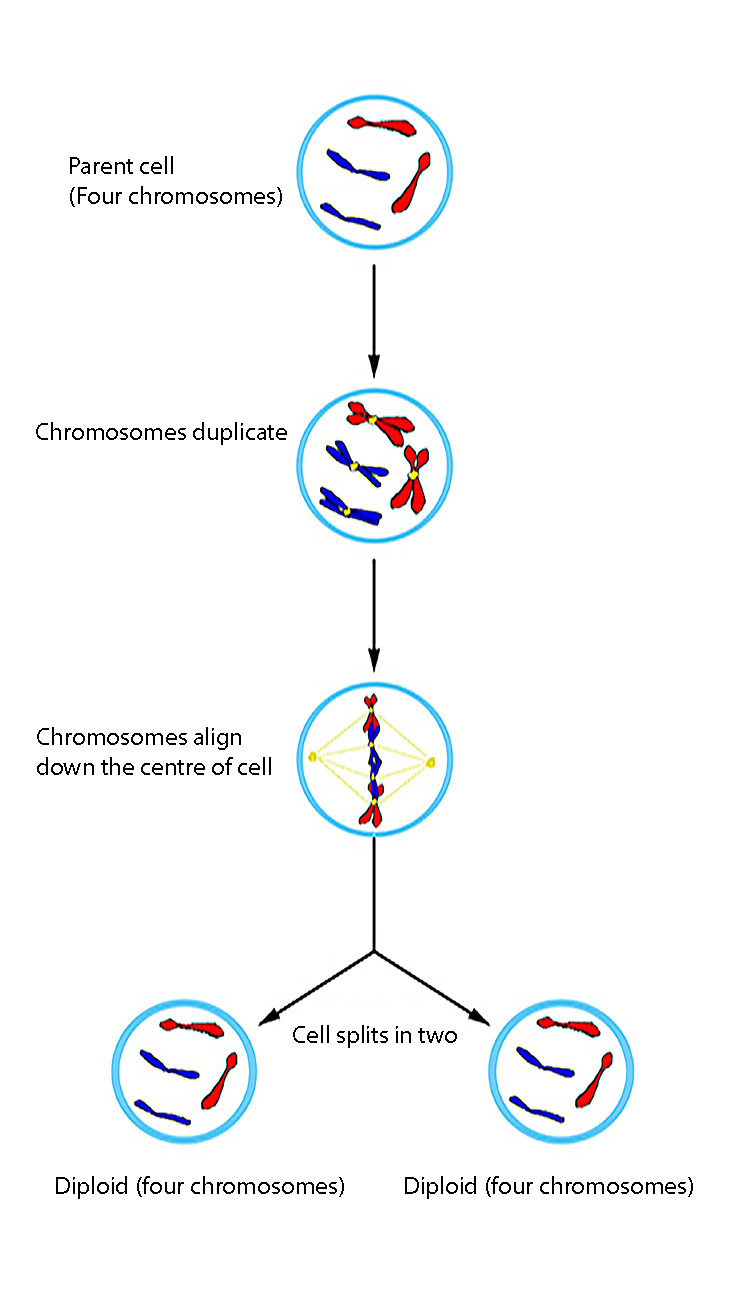
Mitosis is essential for replacing damaged cells, healing wounds, and allowing organisms to grow from a single fertilised egg into a fully developed individual.
Note: A new life is formed when meiosis occurs to create sex cells (gametes) with half the number of chromosomes. Once these gametes fuse to form a zygote, mitosis is the process the resulting zygote uses to divide and develop and grow into a new organism.