oviparous – (of an animal) producing young by laying eggs
(Pronounced oh-vih-puh-rus)
To remember the meaning of oviparous, use the following mnemonic:
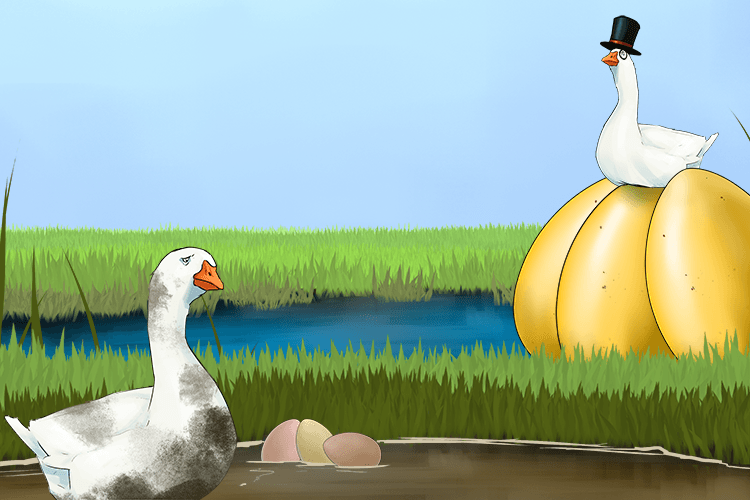
Over in the more prosperous (oviparous) pond, the geese laid golden eggs.
Oviparous refers to animals that reproduce by laying eggs, with the developing embryo growing and hatching outside the mother's body. This reproductive strategy is found in many different animal groups including birds, most reptiles, amphibian, fish and insects. The eggs contain all the nutrients and protective structures needed for the embryo to develop, including the yolk for nutrition, albumen (egg white) for additional nutrients and cushioning, and a protective shell and membrane.
The advantage of oviparity is that it allows mothers to produce many offspring at once without the energy cost of carrying them internally, and she can continue feeding and caring for herself during the development period. The eggs can also be laid in safe locations away from predators or in environments that provide optimal conditions for development. The disadvantage is that the developing young are more vulnerable to predators, disease, temperature changes, and other environmental hazards since they lack the protection of the mother's body. Many oviparous animals have evolved strategies to improve egg survival, such as building nests, camouflaging eggs, or providing parental care by guarding or incubating the eggs.