receptor – a specialist protein structure that detects a change in the environment and converts it into an electrical impulse
(Pronounced ruh-sep-ter)
To remember the meaning of receptor, use the following mnemonic:
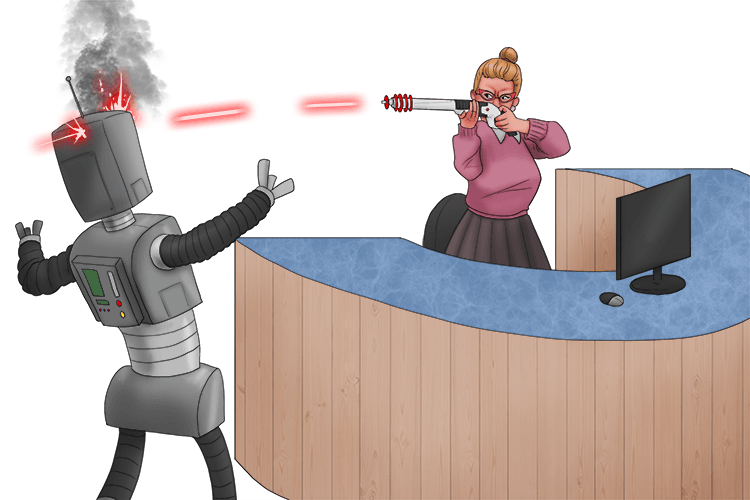
The receptionist turned (receptor) around when she detected the robot and shot a laser (electrical impulse) at it.
Receptors are specialised protein structures that detect and respond to specific stimuli from the internal or external environment. They act as the body's sensory detectors, converting various forms of energy such as light, sound, heat or pressure into electrical nerve impulses which can be interpreted by the nervous system. There are different kinds of receptors for different purposes, such as detecting light (photoreceptors), pressure and touch (mechanoreceptors), temperature change (thermoreceptors) and smell and taste (chemoreceptors). When a receptor detects its specific stimulus, it converts stimulus energy into electrical signals that travel along sensory neurons to the brain or spinal cord for processing and interpretation.
Receptors are essential for allowing organisms to respond appropriately to changes in their environments, enabling survival behaviours like avoiding danger, finding food, or maintaining body temperature.
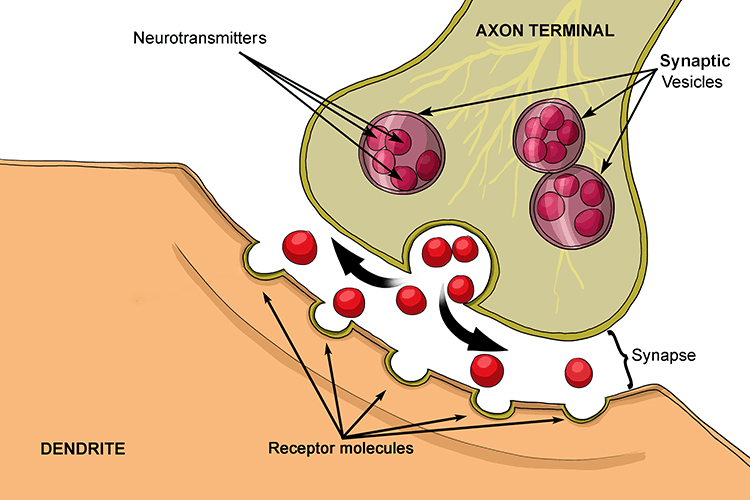
In neurons, receptors are embedded in the membrane at the surface of a dendrite. The dendrite is the end of the neurone that receives electrochemical signals from other neurons and transmits a signal along its neuron.