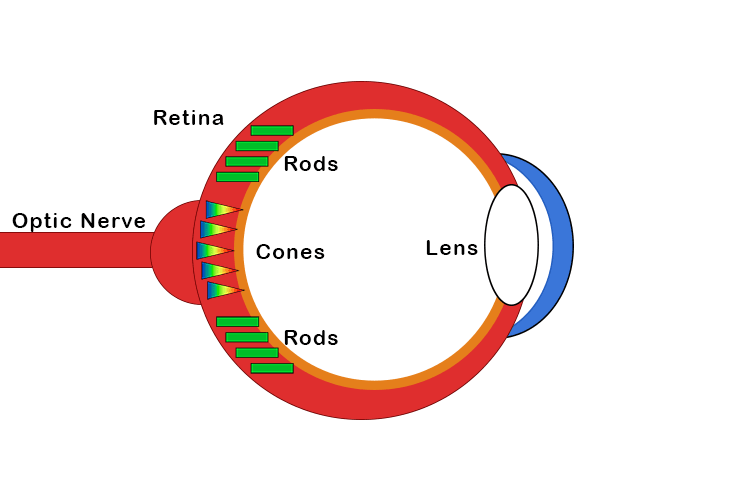
rods (eye) – specialised light detecting cells in the retina important for low-light vision
(Pronounced rods)
To remember the meaning of rods (eye), use the following mnemonic:
These fishing rods (rods) allowed them to see through the ice (eyes) in low light conditions.
-in-biology-vocabulary-copy.2f2ff3a.png)
Rods are specialised photoreceptor cells found in the retina of the eye that are responsible for vision in low-light conditions and detecting black and white images. These cells are called rods because of their elongated, cylindrical shape, and they contain light-sensitive pigment that is highly sensitive to even small amounts of light. Rods are much more numerous than any other type of photoreceptor (cones), with approximately 120 million rods in each human eye, mainly distributed around the outer edges of the retina. The primary function of the rods is to enable night vision and peripheral vision, allowing us to see in dim lighting conditions where cones cannot function effectively. However rods cannot detect colour and only provide black and white vision with relatively low detail compared to cones. When light hits the rods, it triggers a chemical reaction that converts light energy into electrical nerve impulses, which are then transmitted via the optic nerve to the brain where they are interpreted as visual images.