scavengers – animals that consume the dead flesh of animals they have not actively hunted
(Pronounced sca-vun-juh)
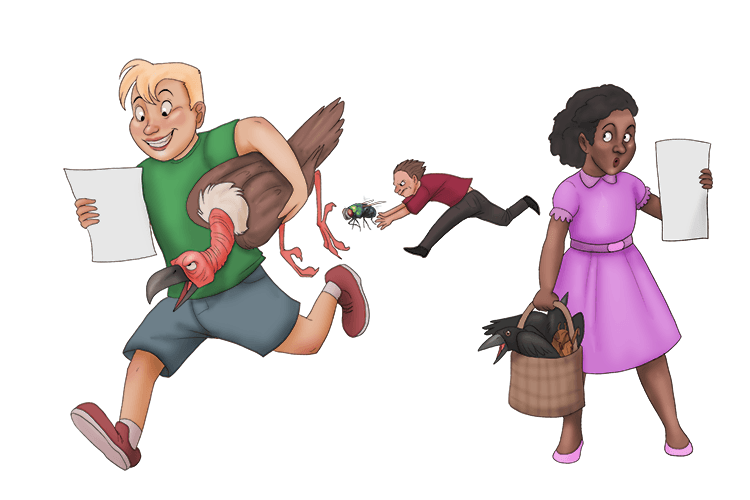
To remember the meaning of scavengers, use the following mnemonic:
Note: A scavenger hunt is a game typically played in an area in which participants have to collect a number of miscellaneous objects.
This scavenger hunt was only for animals who eat flesh but don't actively hunt living prey.
Scavengers feed primarily on dead and decaying organic matter, including the carcasses of animals that have died from other causes rather than hunting and killing prey themselves. These organisms play an important role as nature's clean up crew by helping recycle nutrients into the ecosystem and preventing the spread of disease from rotting carcasses. Scavengers have various adaptations that enable them to locate and consume dead material, including a keen sense of smell to detect decay from long distances, a strong digestive system with highly acidic stomach contents that can break down rotting flesh and kill harmful bacteria, and powerful beaks or jaws capable of tearing through tough hide and accessing nutrient-rich parts of the carcass.
Common examples of scavengers include vultures, which soar high in the sky scanning for dead animals below, hyenas that use their powerful jaws to crush bones and access marrow, and beetles and flies that break down smaller organic matter. Some scavengers operate opportunistically, meaning they will eat scavenged dead matter when available, but can also be predators, animals that scavenge and are also predators include foxes and wolves.