spore – a tiny reproductive cell produced by fungi, bacteria and some plants which develops into an organism
(Pronounced spohr)
To remember the meaning of spore, use the following mnemonic:
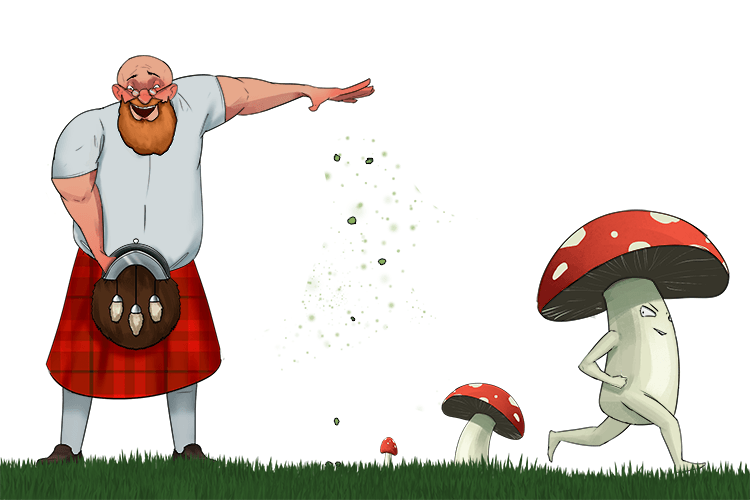
The Scotsman reached into his sporran (spore) and threw tiny one-celled units into the air which landed and developed into new individuals.
A spore is a specialised reproductive cell (they develop into new individuals) or structure produced by various organisms including fungi, bacteria, algae, and some plants like ferns and mosses. Spores are typically single celled (unlike seeds which are multi-celled and found within fruits). Spores do not store food unlike seeds and are highly resistant structures that can survive extremely hash environmental conditions such as drought, extreme temperatures, radiation and chemical exposure that would kill the parent organism. They are designed to remain dormant for extended periods until favourable conditions return, at which point they can germinate and develop into a new organism. Spores serve as both a survival mechanism and a method of reproduction and dispersal, allowing organisms to spread to new locations and survive through difficult periods.
In fungi, spores are often released into the air and carried by wind to colonise new areas. In bacteria, spores help the organism survive when nutrients are scarce or environmental conditions become lethal. The formation of spores is an important adaptation that has allowed many microorganisms and plants to succeed in diverse environments and persist through changing conditions over millions of years.
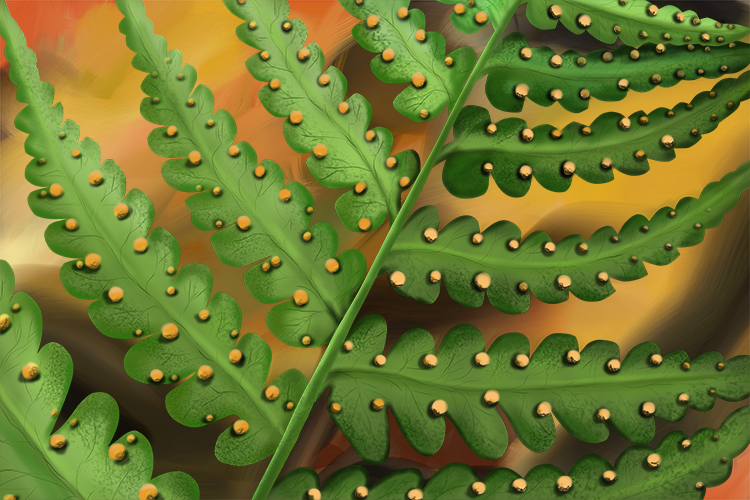
Spores can be found on leaves, specifically on the underside in many seedless plants such as ferns.
Spores are dispersed by the wind. Below is a plant giving off spores to be taken by the wind.
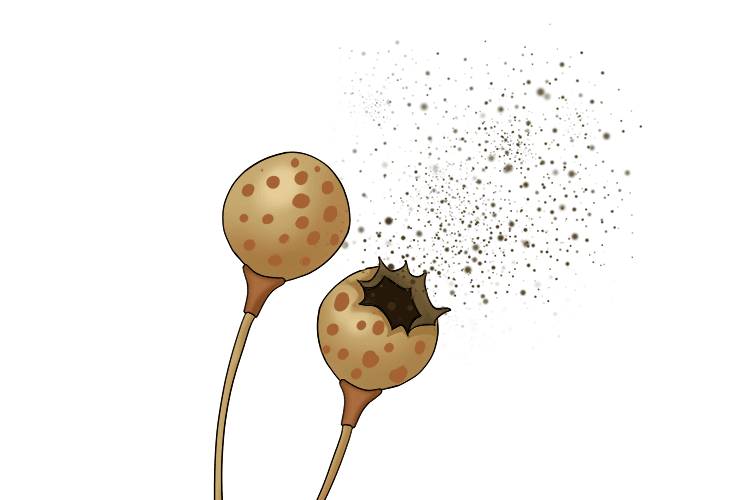
Mushrooms disperse spores into the wind.
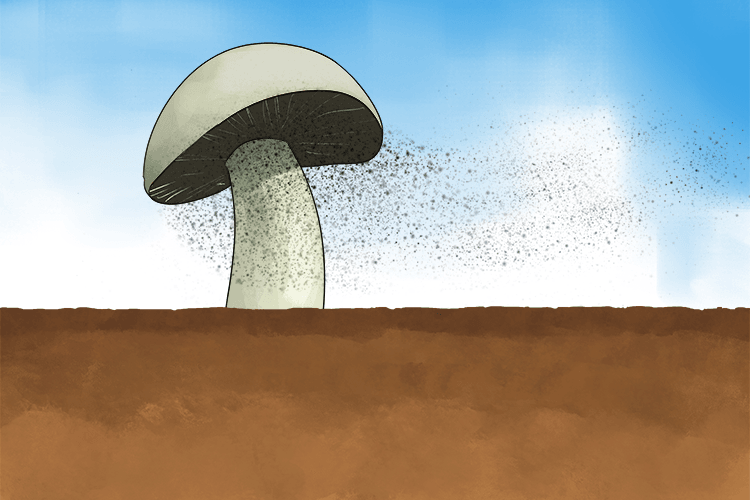
Spores from bacteria, fungi, algae and some plants can be found in a wide variety of environments including soil, water, air and even on living hosts.