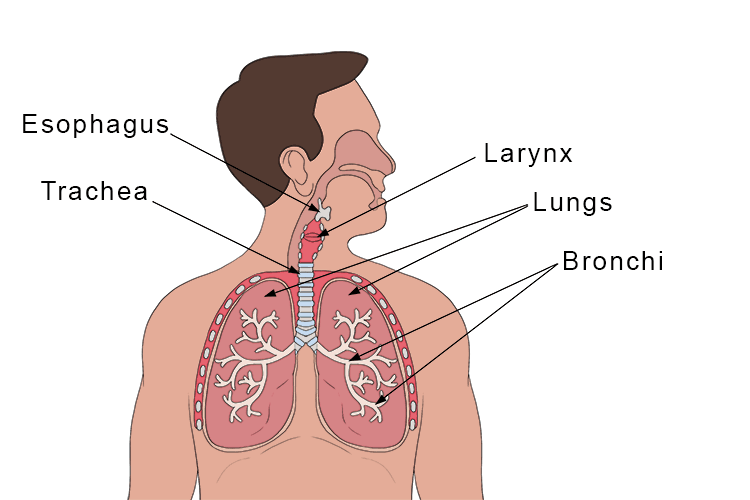
trachea – tube that allows the passage of air into and out of the lungs via the mouth and nose; the wind pipe
(Pronounced truh-kee-uh)
To remember the meaning of trachea, use the following mnemonic:
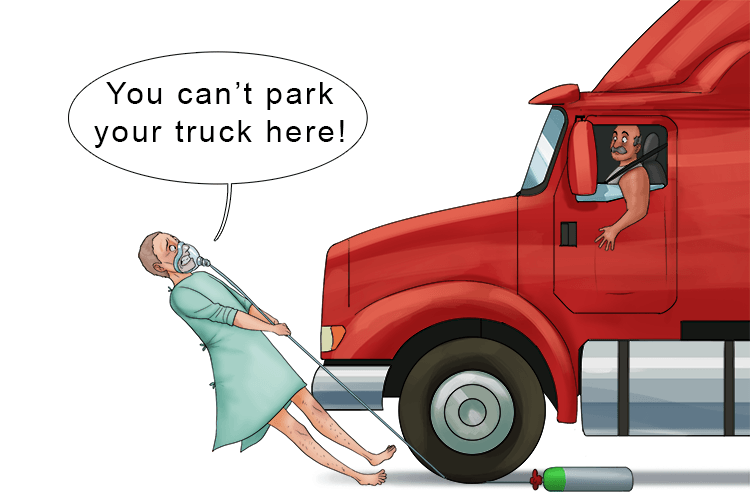
You can't park your truck here (trachea), it's on top of the tube that allows the passage of air.
The trachea, commonly known as the windpipe, is a large tube that forms part of the respiratory system and serves as the main airway connecting the larynx (voice box) to the bronchi in the lungs. It extends from the neck down into the chest cavity where it divides into two smaller tubes called bronchi that lead into each lung. The inner lining of the trachea is covered in mucus producing cells that trap dust, bacteria, and other particles from inhaled air. The primary function of the trachea is to provide a clear, unobstructed pathway for air to flow between the external environment and the lungs during breathing. This structure is essential for ventilation and plays a crucial role in the gas exchange process that supplies oxygen to the body and removes carbon dioxide.