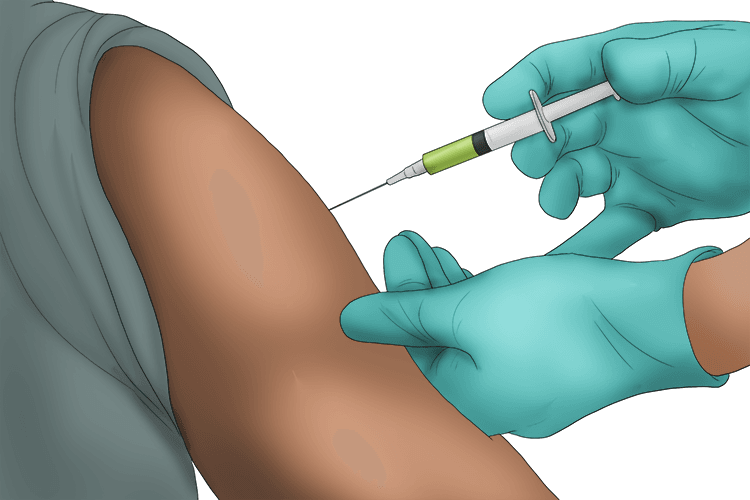
vaccination – Artificially acquired immunity to prevent the effect of a disease by using a weakened form of it
(Pronounced vak-sih-nay-shun)
To remember the meaning of vaccination, use the following mnemonic:
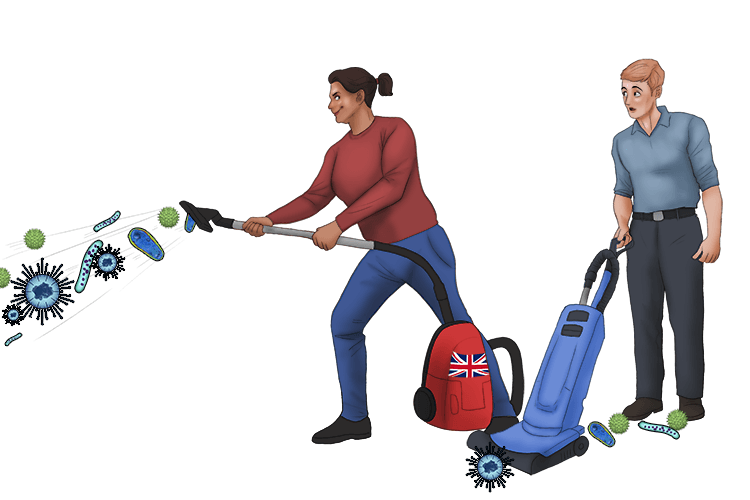
I only bought vacuum cleaners from a single nation (vaccination) that could prevent disease; other vacuum's were weaker (weaker form).
Vaccinations help protect the body from diseases by stimulating the immune system to develop immunity without causing the actual disease. During vaccination, a weakened, dead or fragmented form of a pathogen (such as a virus or bacteria) are introduced into the body, usually through an injection. This triggers the immune system to produce specific antibodies and memory cells against that particular pathogen. The memory cells remain in the body for a long time, sometimes for life, so if the person is later exposed to the real pathogen, their immune system can quickly recognise it and produce antibodies rapidly to destroy it before it causes illness. Vaccination has been crucial in controlling and even eradicating serious diseases like smallpox and polio, and it works on the principle of providing active immunity without the risk of suffering the actual disease.