moles method 1
All protons and all neutrons weigh:
0.00000000000000000000000167262 grams (a very tiny amount).
If you multiply that by:
602214076000000000000000 (a massively high number).
you get 1 gram.
Note: They call 6.02214076 x 10²³ (in standard form) a mole or Avogadro's constant (two names for the same thing).
Conclusion
1 mole of any proton or neutron weighs 1 gram
Example
What is the weight of:
1 mole of hydrogen (has 1 proton) = 1 gram
1 mole of carbon (6 protons + 6 neutrons) = 12 grams
1 mole of carbon dioxide (22 protons + 22 neutrons) = 44 grams
1 mole of water (H20) (1 proton + 1 proton (hydrogen)) + 8 protons + 8 neutrons (oxygen)) = 18 grams
Why do we work in moles?
In this glass is 18 grams of water.
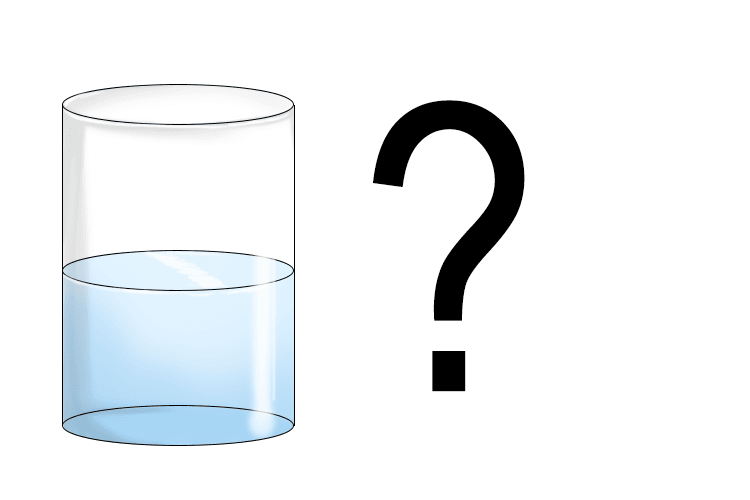
If you could take each molecule of water (H20) and put each one in a separate glass how many glasses would you need?
You would need:
602, 214, 067, 000, 000, 000, 000, 000 glasses 4.5 million times.
It would cover the world with glasses 4.5 million times (yes, million).
Scientists needed a convenient way to bridge the gap between the microscopic world of atoms and molecules and the larger quantity to be measured in laboratories.
So a scientists would say the glass below contains 1 mole of H20 molecules.
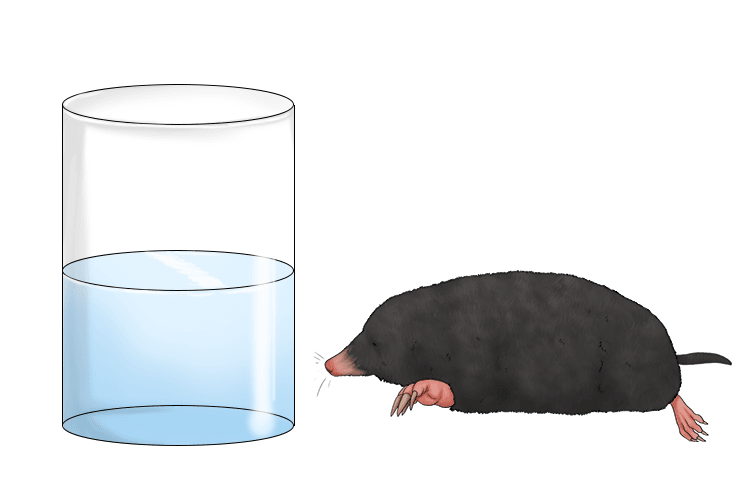
Moles allow chemists to "count" the number of particles by simply weighing the substance on scales.
And in this case 1 mole of water weighs 18 grams.
Moles and Avogadro's Constant
Scientists call 6.02214076 x 10²³ a mole or Avogadro's constant (two names for the same thing).
If you ask for a "mole of hydrogen" and "an Avogadro's constant of hydrogen" you are asking for the same thing in terms of number of particles. The standard scientific unit used is to ask for "a mole of hydrogen."
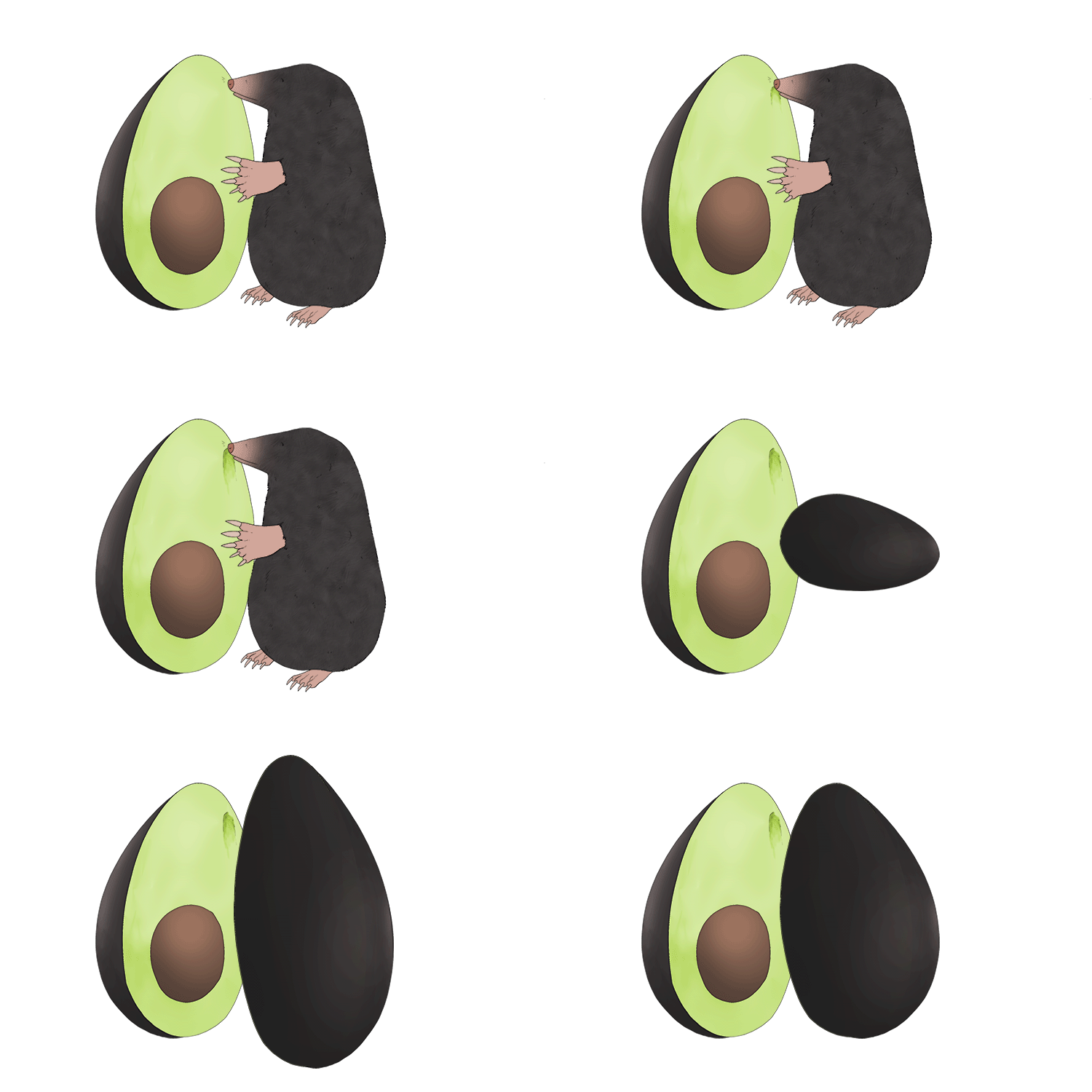
To remember that a mole and an Avogadro's constant are two names for the same thing, use the following mnemonic:
This mole loves eating avocados (Avogadro's constant) and eats so many that she will turn into an avocado at this rate.