women in the early 1600's
Understanding the context of women in the early 1600's is crucial for analysing Macbeth. It's the key to unlocking the play's central tensions and Shakespeare's clever subversion of expectations.
In the early 1600's society was deeply patriarchal (society and government controlled by men). A woman's identity was defined by her relationship to men: first her father, then her husband.
The ideal woman was expected to be:
- Chaste, silent and obedient: A phrase from the wedding service of the time was, "to love, cherish and to obey." Women were expected to be submissive to male authority, ruled by their husbands.
- A mother: her primary value was in bearing children, especially sons, to continue the husband's bloodline.
- A hospitable housewife: She was to manage the domestic sphere, not the public or political one. Her role was to support her husband's ambitions, not have her own.
- Pious and modest: Religion was central to life, and women were expected to be models of virtue.
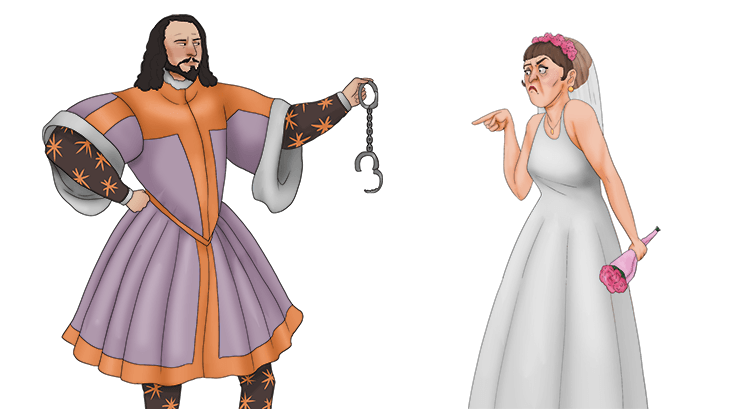
In Lady Macbeth's famous soliloquy, she calls on spirits to "unsex me here." This is a direct rejection of her feminine, maternal qualities to pursue a male ambition. Lady Macbeth recognises that to achieve power in a man's world in the early 1600's she must strip herself of her femininity. She has to give up her womanhood, her natural, God ordained state of being, in order to bring about the fulfilment of her ambitions. Lady Macbeth is the driving force behind the plot to kill Duncan. She manipulates and questions Macbeth's masculinity ("When you durst do it, then you were a man"). This reverses the expected power dynamic in a marriage. She shames and pushes him into acting - going against early 17th century expectations of the behaviour of a wife at the time.
A Jacobean audience would have been horrified by Lady Macbeth's soliloquy.