Macbeth shall never vanquish'd be until Great Birnam Wood to high Dunsinane Hill shall come against him
To remember this quote use the following mnemonic.
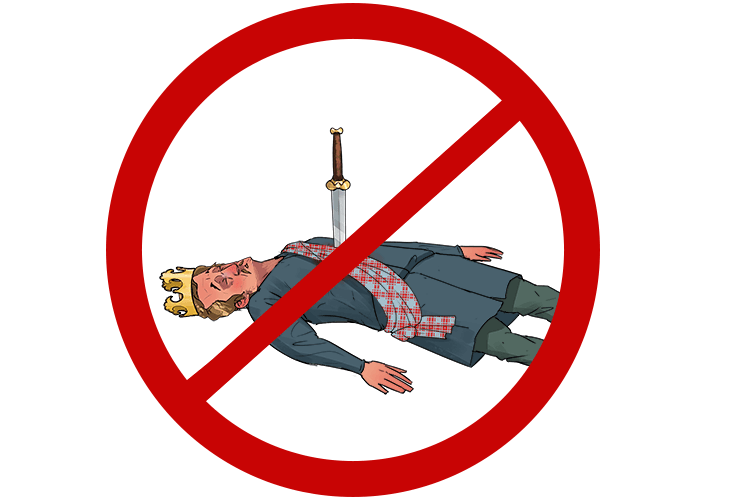
Macbeth shall never be vanquished.
Note: 'Be' and 'vanquished' have been reversed.
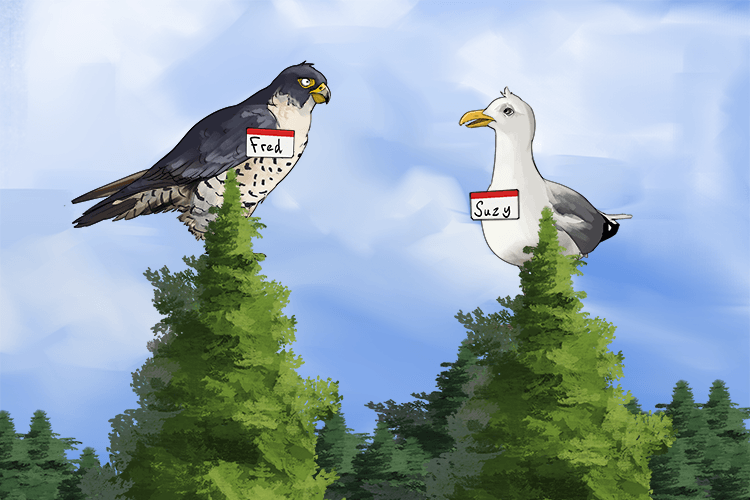
Until great big birds with names (Birnam) that are in the woods.
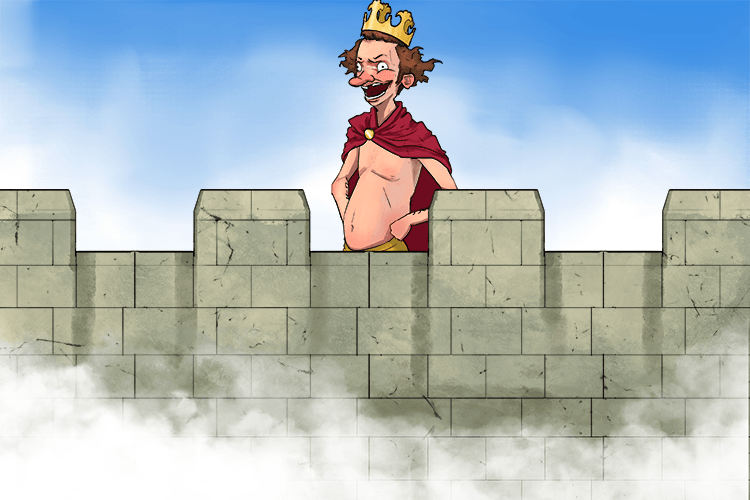
To the high castle where Duncan who's insane (Dunsinane) is king.
Shall come against him.
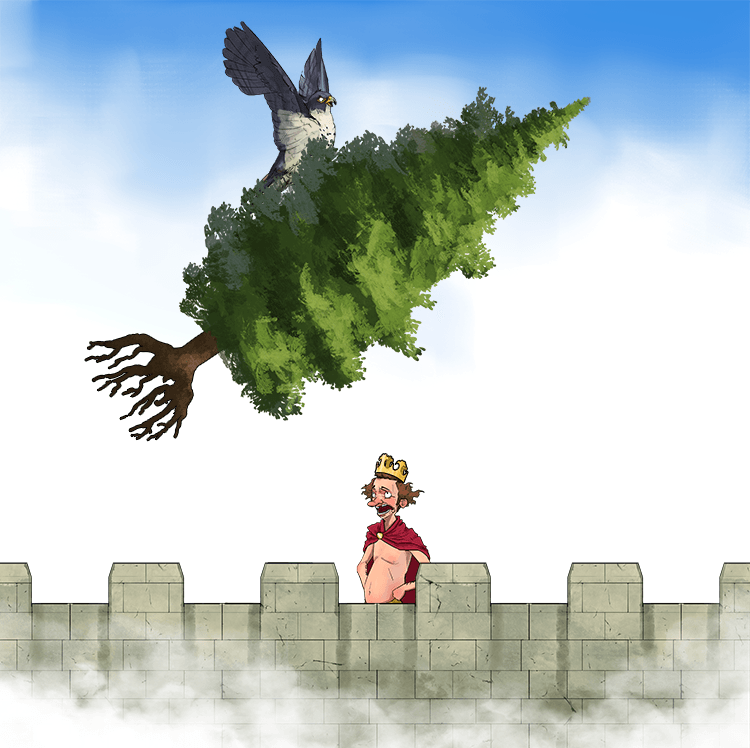
"Macbeth shall never vanquish'd be until Great Birnam Wood to high Dunsinane Hill shall come against him." Act 4, scene 1, line 91. Spoken by the third apparition, a supernatural figure conjured by the witches during Macbeth's second visit to them.
Meaning
- "Macbeth shall never vanquish'd be until Great Birnam Wood to high Dunsinane Hill shall come against him." - This prophecy tells Macbeth that he will not be defeated until Birnam Wood (a forest) moves to Dunsinane Hill (a castle sits on top of Dunsinane Hill in the play. Macbeth lives in this castle and it is where Macbeth kills King Duncan when he comes to stay).
- Macbeth interprets this literally, believing it's impossible for a forest to move, and therefore he thinks he's invincible. But, the prophecy is intentionally misleading. Later in the play, Malcolm's army cuts down branches from Birnam Wood and uses them as camouflage as they march to Dunsinane making it appear as though the forest is moving.
Exam advice
- Theme of fate and free will - This is another prophecy that gives Macbeth false confidence. He thinks he's untouchable, which leads to his downfall.
- Ambiguity and deception - The witches speak in riddles. Their words are true in a twisted way, but Macbeth misunderstands them due to his ambition and arrogance.
- Dramatic irony - The audience can sense the danger of trusting such misleading supernatural messages.
- Theme of the supernatural - The witches manipulate Macbeth by giving him cryptic but dangerous prophecies.
- Tragic hero and downfall - Macbeth's belief in his invincibility leads him to fight to the end, even when all seems lost.