Unseam'd him from his nave to th'chops and fix'd his head upon our battlements
To remember this quote use the following mnemonic.
He unseamed him from his navel to the chopsticks,
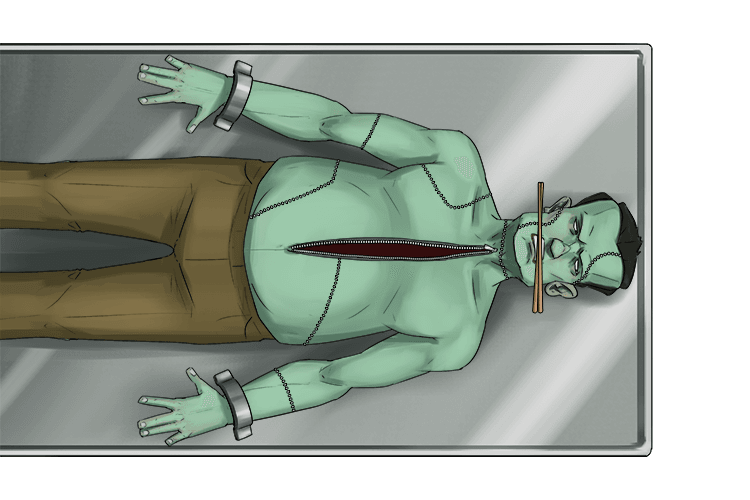
and fixed his head upon our battlements.
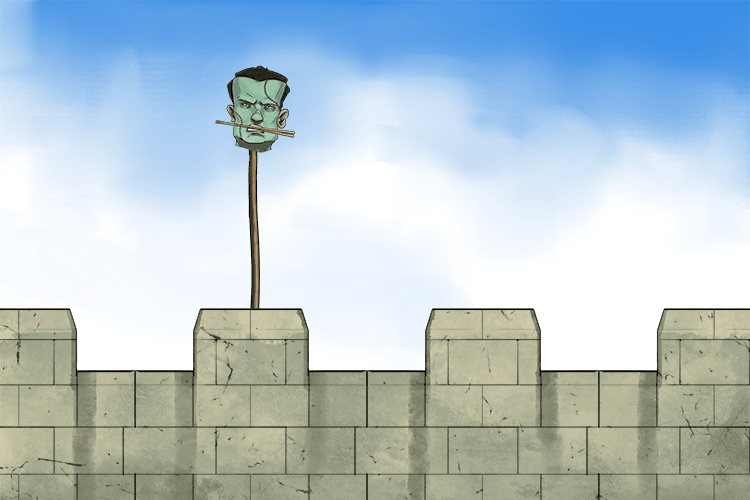
"Unseam'd him from his nave to th'chops and fix'd his head upon our battlements." Act 1, scene 2, line 22. A wounded captain is describing Macbeth's heroic actions in battle to King Duncan.
Meaning
- "Unseam'd him from nave to th'chops." - Macbeth cut his enemy open from the navel (belly button) to the jaws like ripping open a seam in clothing, a violent, deadly blow.
- "And fix'd his head upon our battlements." - After killing the rebel Macdonald, Macbeth cuts off his head and displays it on the castle walls as a symbol of victory and warning.
- At this point in the play Macbeth is being praised as a brave, loyal warrior, fighting for Scotland and King Duncan.
Exam advice
- Heroism and brutality - Early in the play Macbeth is seen as a national hero but the violence he uses is already shocking and extreme. Shakespeare presents the idea that violence can be both honourable and dangerous.
- Foreshadowing - The image of beheading and displaying a head foreshadows Macbeth's own fate at the end of the play when he is killed and beheaded by Macduff.
- Ambiguity and violence - This moment shows that Macbeth is capable of great violence which is admired in war but becomes horrific when turned against his own people later in the play.
- Imagery and Language - The metaphor of "unseam'd" connects violence to something methodical, almost surgical, hinting at Macbeth's cold and calculated nature.