Four Chinese Mandarin Tones
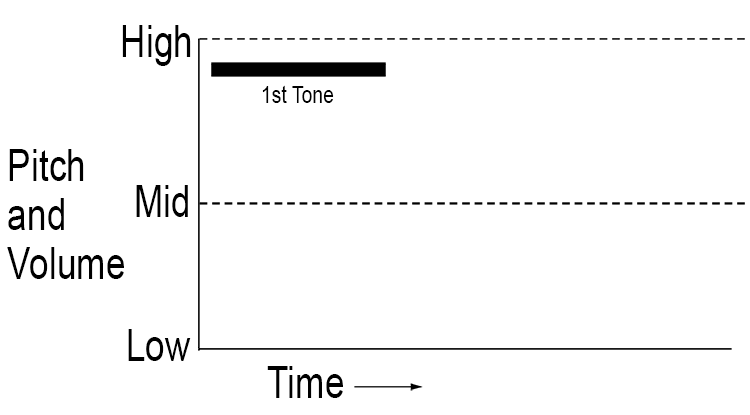
1st Tone
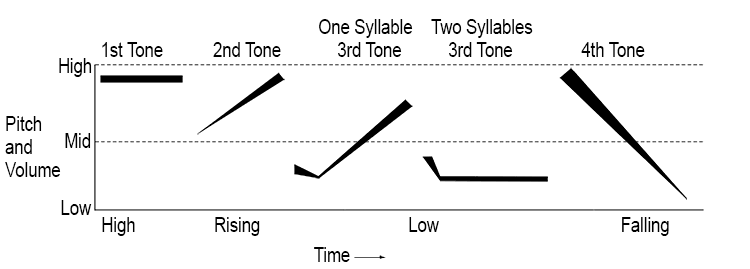
This is represented by an accent above a pinyin letter that is flat as follows
ā or ē etc.
The syllable is said with a high pitched even tone with no emphasis while maintaining the same volume. It can be represented on a graph as follows:
2nd Tone
This is represented by an accent above a pinyin letter that is slanted upwards as follow:
á or é etc.
The syllable starts as a comfortable mid tone and rising to a high tone. The second tone has more emphasis (volume) in the latter part of the tone.
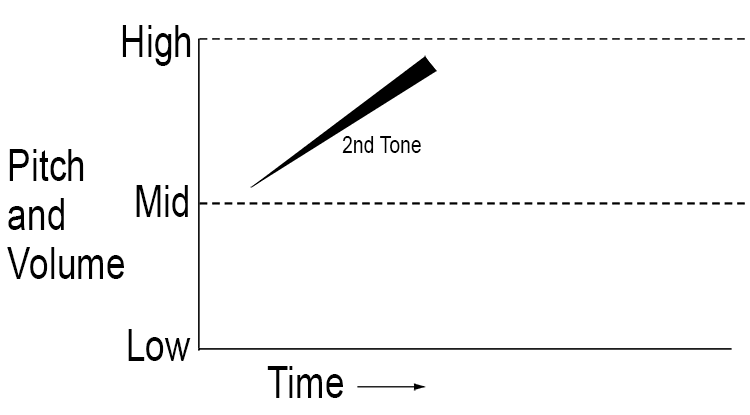
If you find it hard to rise on the second tone it could be because you start too high. Simply start lower. Just make sure the second tone rises in pitch and volume.
3rd Tone
This is represented by an accent above a Pinyin letter that is shaped like a "U" as follows:
ă or ĕ etc.
If this is a very short word like mă, i.e. one syllable long, then the word starts lower, then falls even more, before rising again. It's an exaggerated dipping pronunciation. It can be represented on a graph as follows:
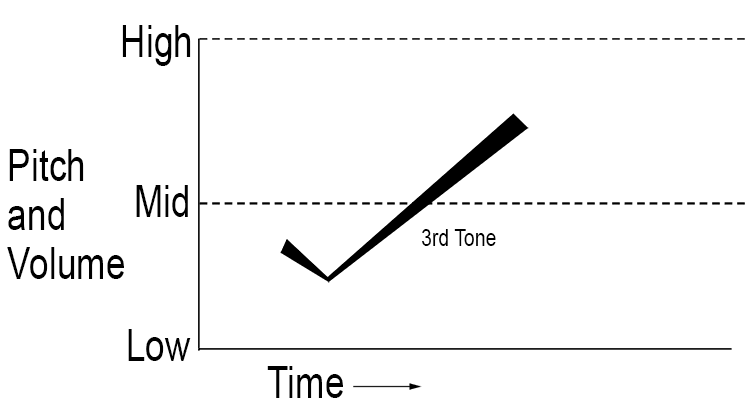
Over 90% of the time the third tone is within a word containing other tones, such as the word seafood which is hăixiān.
Here the 3rd tone requires you to speak between a mid to low pitch and volume and drop and hold a low pitch and volume. It can be represented on a graph as follows:
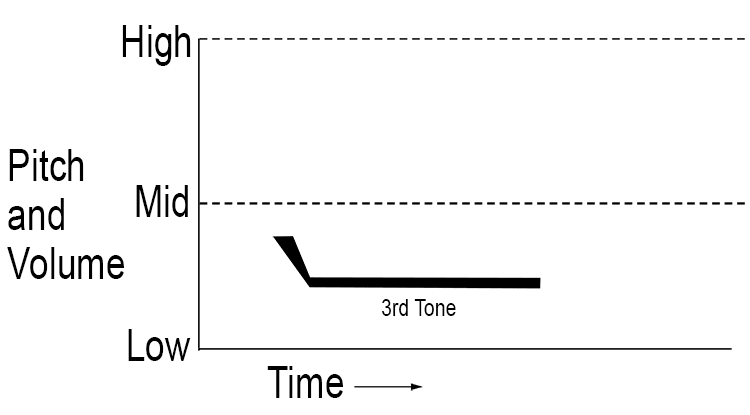
The last part is a sustained low pitch.
4th Tone
This is represented by an accent above a Pinyin letter that is slanted downwards as follows:
à or è etc.
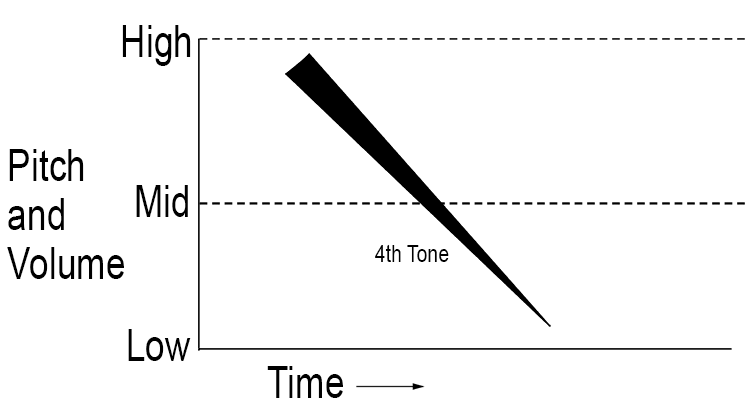
The syllable starts from your highest pitch (slightly higher than 1st tone) and goes all the way down to your lowest point in your vocal range (above 1st tone level to 3rd tone level).
It can be represented on a graph as follows:
Summary
Below is a summary of the four tones on a graph used for comparison.