chain reaction – a self sustaining process where one reaction triggers further reactions
To remember the meaning of chain reaction, use the following mnemonic:
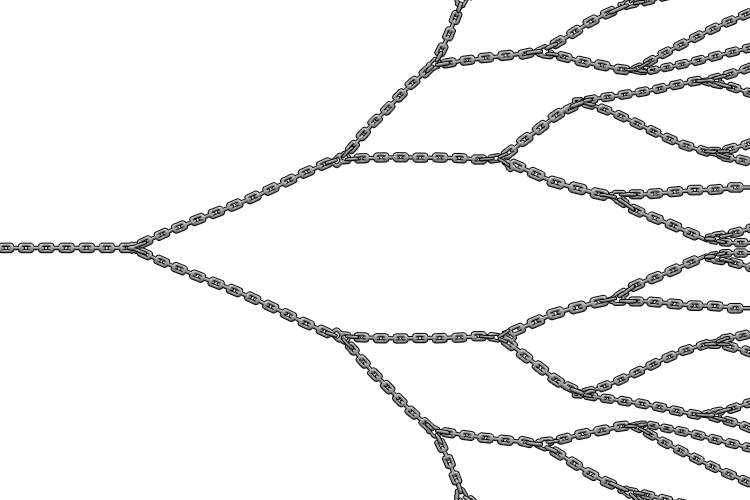
The chain's reaction (chain reaction) was to split into more chains which in turn split again.
Chain reactions occur during different types of chemical reactions, including nuclear fission and combustion. In a nuclear fission reaction, a neutron will collide with a large, unstable nucleus (such as uranium-235 or plutonium-239), causing it to split into two smaller nuclei and release energy along with two or three more neutrons. These newly released neutrons can then go on to collide with other nearby nuclei, causing them to split and release even more neutrons, continuing the process.
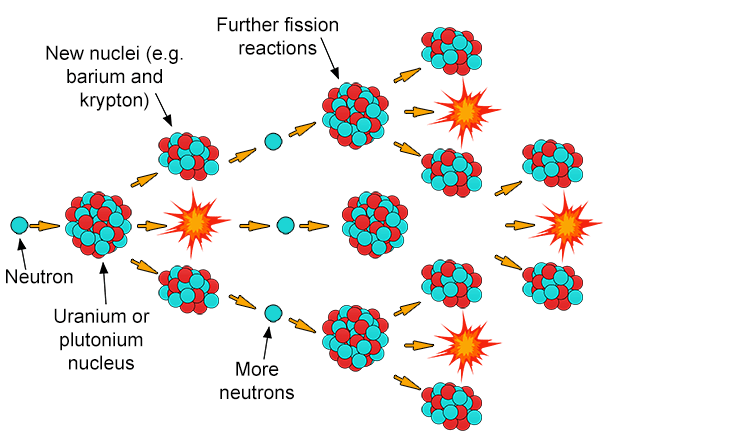
In an uncontrolled chain reaction, such as in a nuclear weapon, the reaction proceeds extremely rapidly and releases enormous amounts of energy in a short time, resulting in an explosion. However, in a controlled chain reaction, such as a nuclear power station, control rods made of non-fissile material are used to absorb some of the neutrons, slowing down the rate of reactions to maintain a steady, controlled released of energy that can be used to generate electricity safely.
In combustion, because it's a self sustaining process where heat energy releases from burning material, it causes more of that material to ignite and burn, which continues the cycle by releasing more heat.
For the chain reaction to continue, three things must be present: fuel, oxygen, and heat. If any one of these is removed, the chain reaction stops and the fire goes out.