magnetic poles – the opposite ends of a magnet designated as north and south where the magnetic forces are strongest
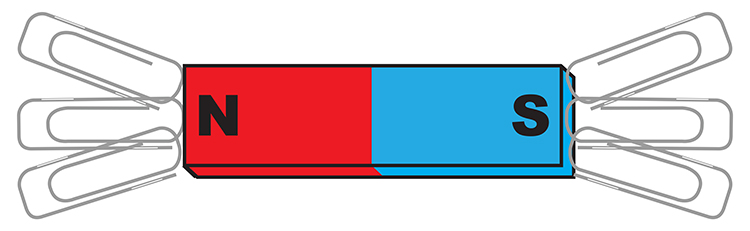
The ends of a magnet are called poles.
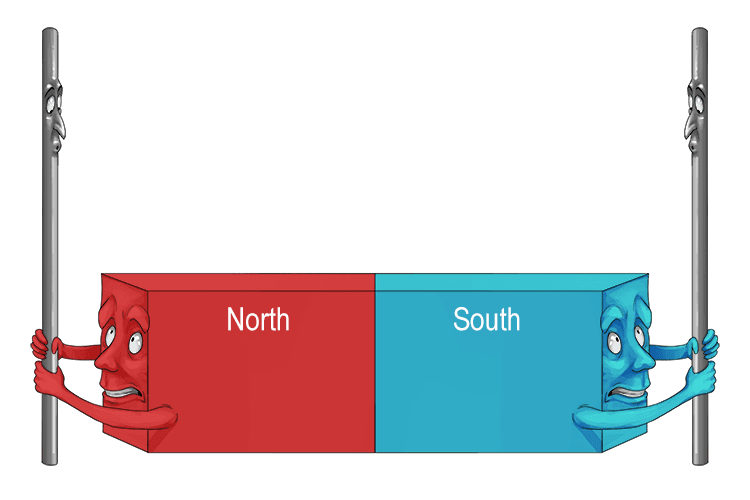
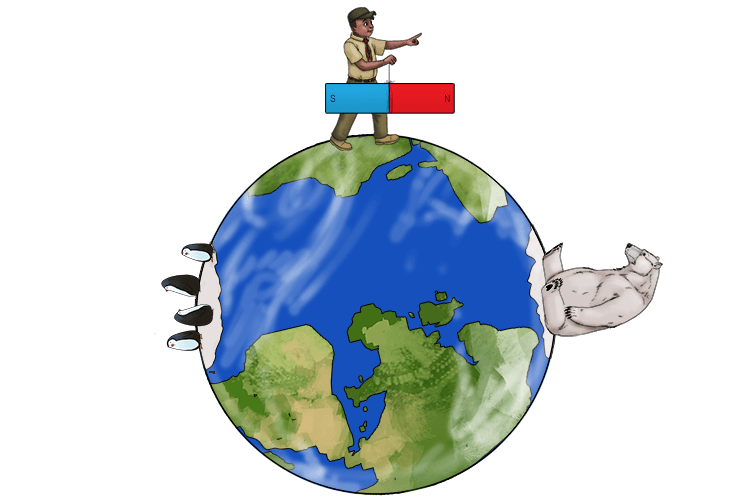
To remember that the ends of a magnet are poles and that the forces are strongest here, use the following mnemonic:
The ends of the magnet were attracted to the poles and held on at the ends very strongly (strongest at ends).
The North pole of a freely suspended magnet or compass points towards the Earths North pole.
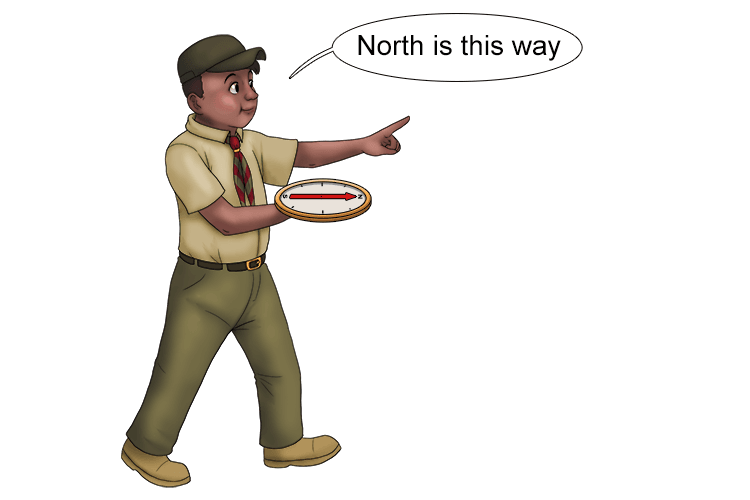
The international convention is that a north pole is coloured red and south pole is coloured blue. On a compass too the red end of the needle is a north pole and points to the Earths North Pole.
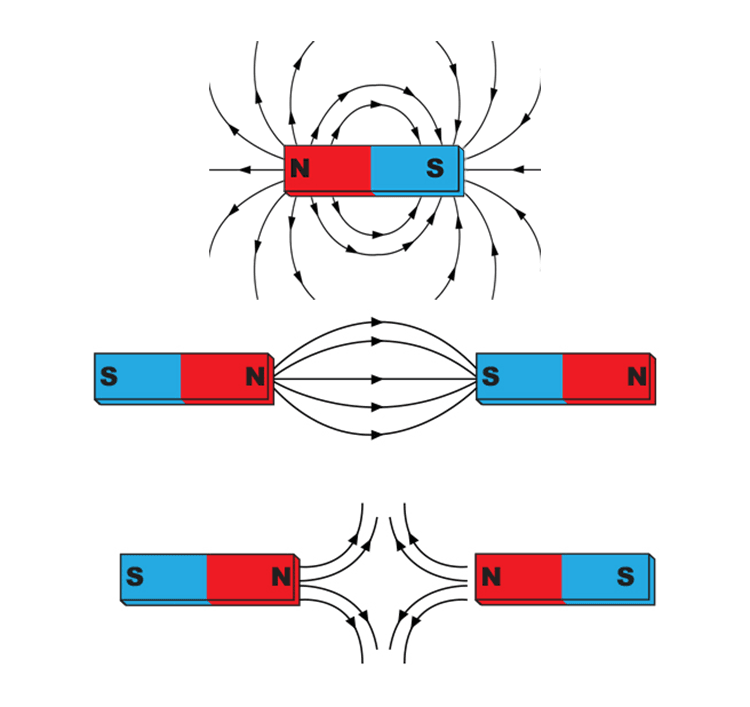
Magnetic fields around a magnet have the convention that they travel from north to south.
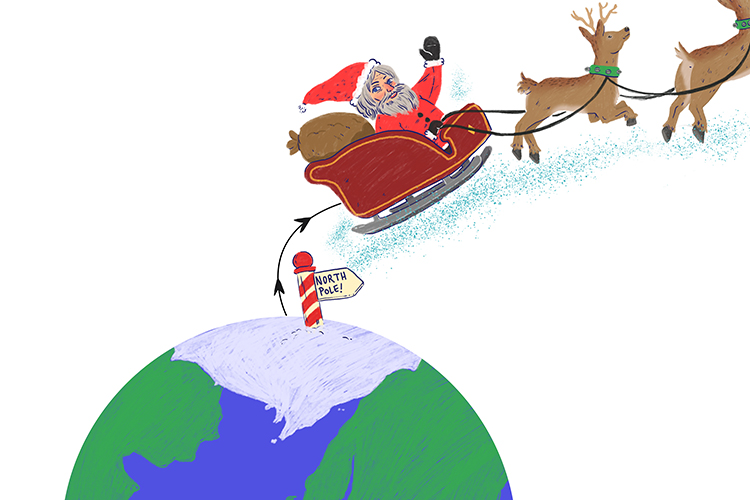
To remember that the north is coloured red on a magnet and that the magnetic field travels around a magnet from north to south, use the following mnemonic:
Santa in red leaves the North Pole that's the direction he first goes.
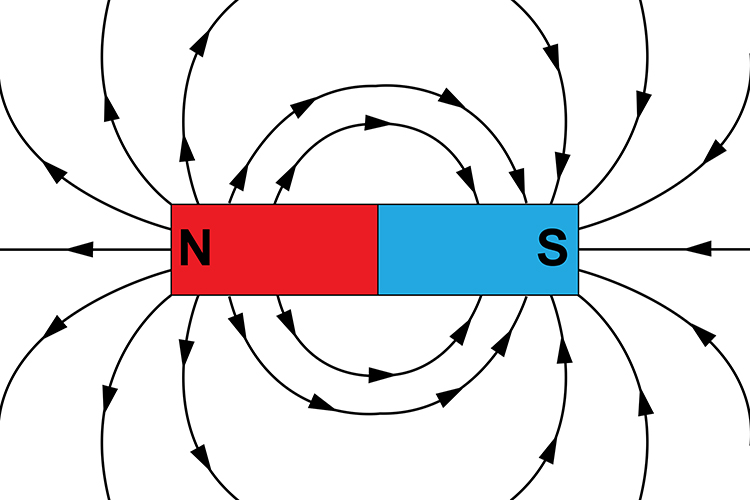
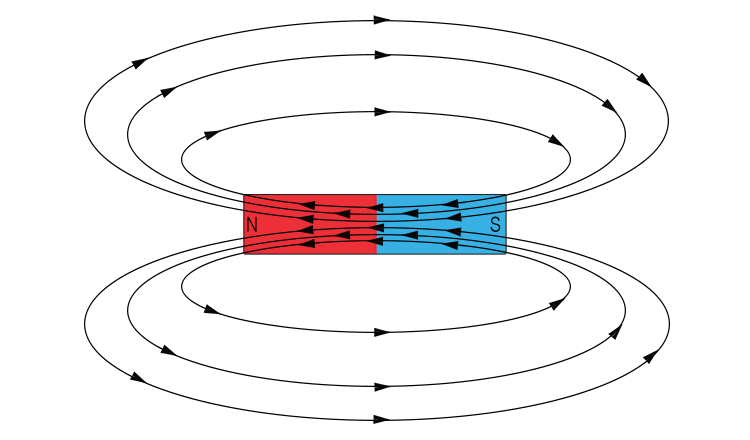
Also note that if you were to carry those arrows on they would pass inside the magnet as south to north.
Like poles, north to north and south to south, repel each other, pushing away with a force that increases as they get closer.
Unlike poles, north to south, attract each other, pulling together with a force that also increases with proximity.
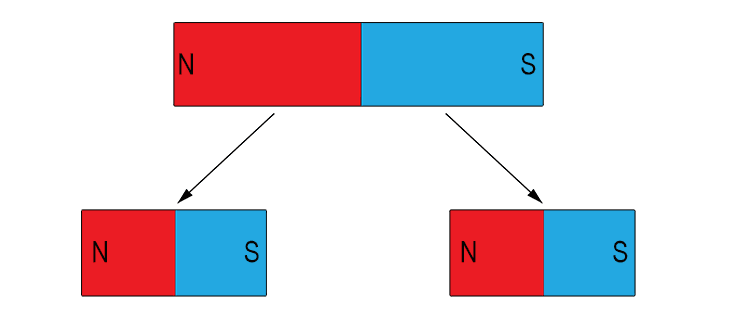
Magnetic poles always exist in pairs and cannot be isolated; if you break a bar magnet in half, you don't get separate north and south poles but instead create two smaller magnets, each with their own north and south poles.