refraction – the redirection of a wave as it passes from one medium to another
(pronounced ri-frak-shun)
(Note: Refraction = change in direction).
To remember the meaning of refraction, use the following mnemonic:
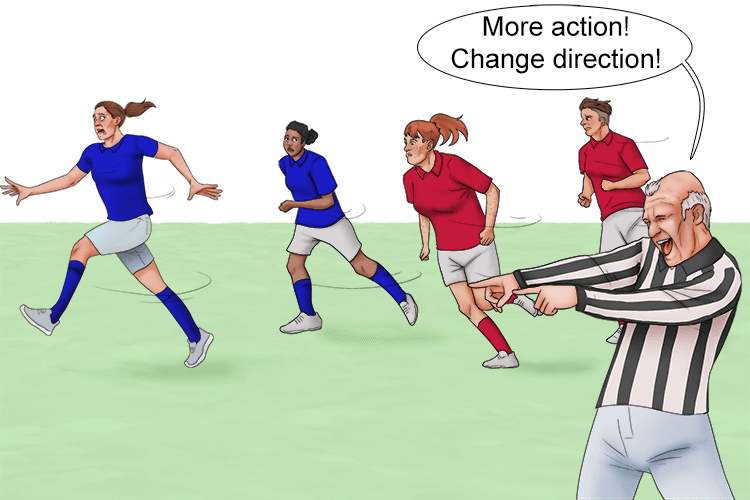
The referee wanted more action (refraction) from the players, so they all quickly changed direction.
Refraction is the bending of waves that occurs when they pass from one medium into another with a different density, caused by a change in the wave's speed as it moved between materials. This phenomenon applies to all types of waves including light waves, sound waves, water waves, and seismic waves (caused by earthquakes).
When any wave travels from one medium to another (where it has a different speed), it changes direction if it enters at an angle. Waves bend toward the normal (an imaginary line perpendicular to the boundary) when entering a medium where they travel more slowly, and bend away from the normal when entering a medium where they travel faster.
To remember that waves, like light, bend towards the normal line when going from air then water, use the following mnemonic:
The tractor was moving quickly until it hit mud. The first wheel to hit, slowed which pulled the whole tractor around until the tractor got going again but by then it had already changed direction.
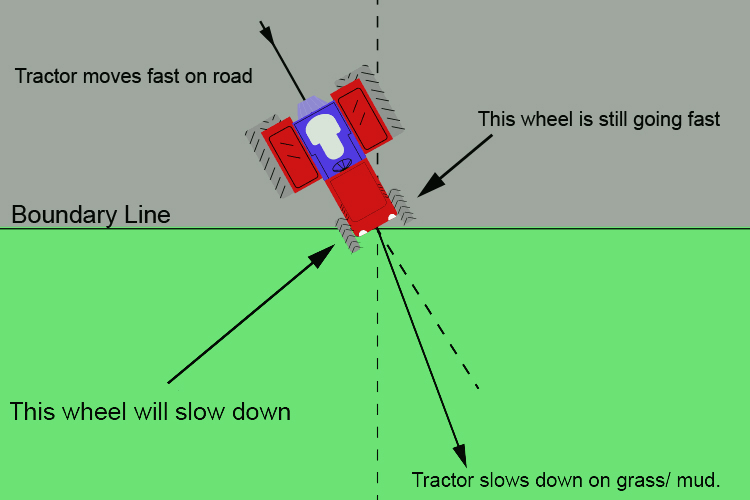
Obviously, the opposite happens when the tractor comes out of the muddy field.
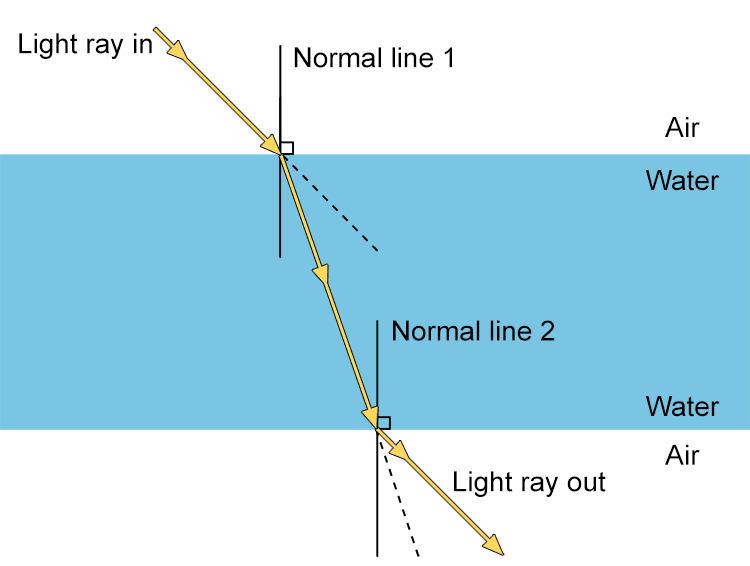
You can see that the light wave changed direction when it went into or out of a different density medium.
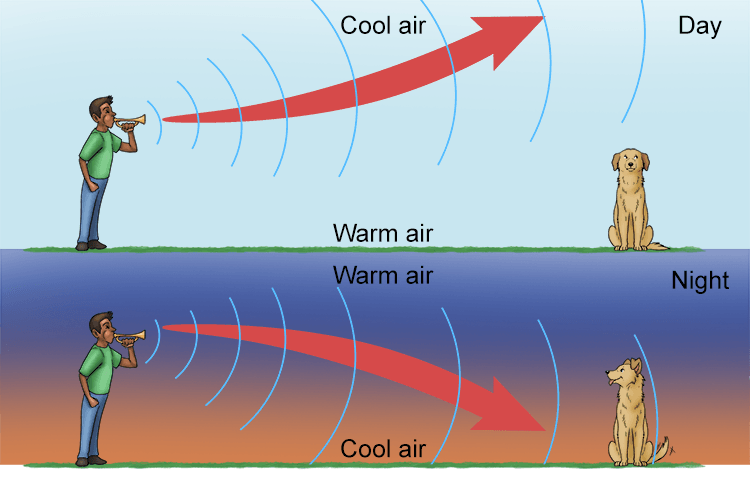
In terms of a longitudinal wave, sound waves refract when passing through layers of air at different temperatures, this is why sound waves can travel further at night and be heard more clearly. This is due to temperature inversion, where cool air settles near the ground and warm air sits above it. Sound travels faster in warmer air, so the top of the sound wave accelerates, bending the wave back towards the ground, allowing it to travel further and louder. This bending of the wave is the refraction.