seismic – relating to earthquakes or other vibrations of the earth
(pronounced sahyz-mik)
To remember the meaning of seismic, use the following mnemonic:
The size of Mickey Mouse (seismic) caused an earthquake.

Note: Scientists study seismic activity which is geology relating to or caused by an earthquake.
When an earthquake occurs two tectonic plates (the movement of the large sheets of rock (called plates) that form the earths surface) push or pull against each other. The rocks along a fault are locked due to friction, so elastic strain energy builds up inside.
When the stress becomes greater than the friction holding the rocks they suddenly break or slip. The rocks snap back toward their original shape.
When rocks suddenly slip two different types of motion are produced, P waves and S waves.
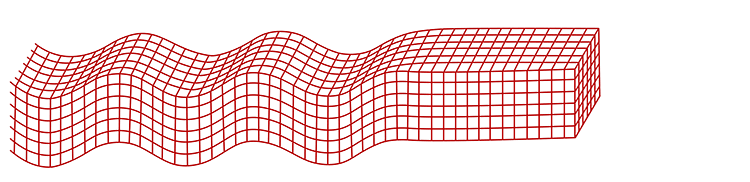
P waves are caused by compression and expansion of rock. Particles vibrate backwards and forwards in the same direction as the waves. They are longitudinal waves. They travel through solids and liquids.
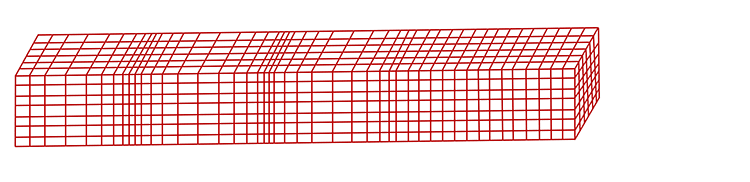
S waves occur because when the rock slips they don't just compress they also cause the surrounding rock to shear (twist sideways) and up and down. Particles vibrate perpendicular to the direction the wave travels. They are transverse waves. They can only travel through solids (because liquids can't shear). They are slower than P waves.