active site – a specific region on an enzyme where the substrate binds and the reaction takes place
Note: 1. Enzymes are proteins that act as biological catalysts 2. A substrate is a substance on which enzymes act.
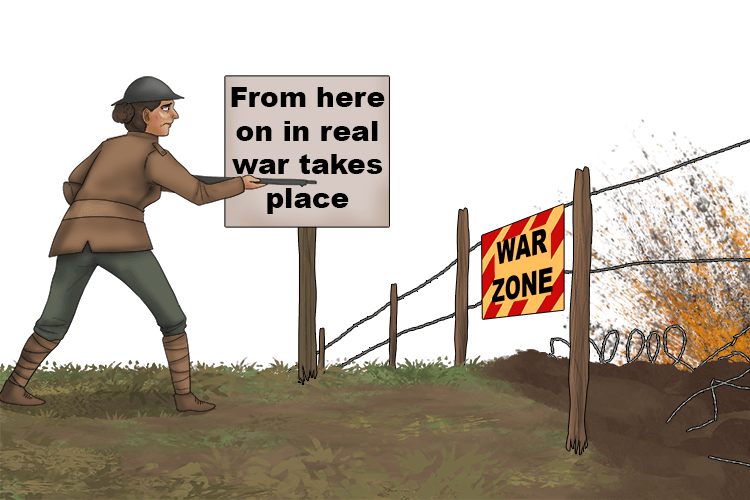
To remember the meaning of active site, use the following mnemonic:
Real activities occurs on this site (active site). We end playing, this sign (enzyme) makes it clear that in this region war activity takes place.
Enzymes have complex three-dimensional shapes that are folded to allow smaller molecules to fit into them. The area where these molecules fit is known as the active site.
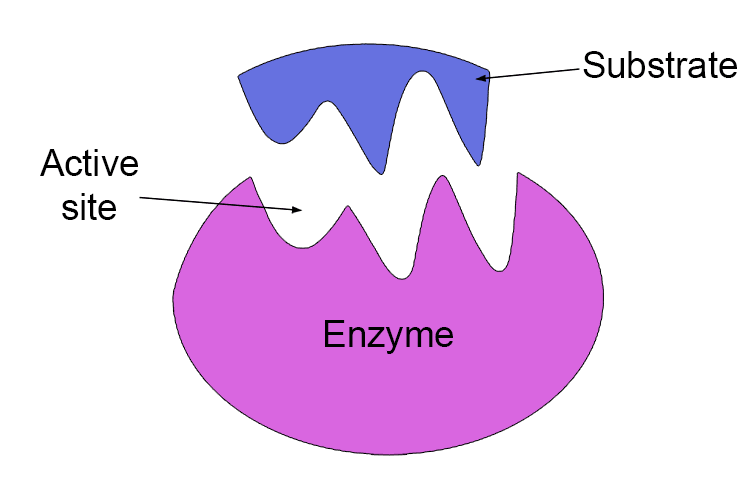
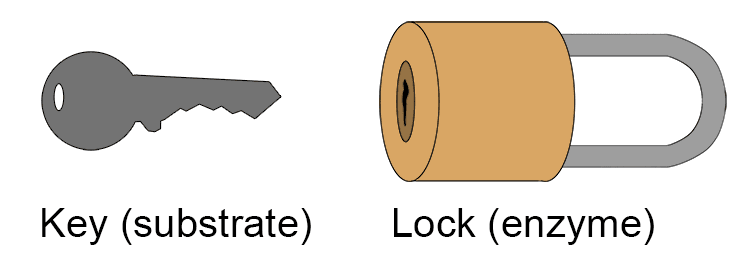
Each enzyme's active site is perfectly formed to fit a matching substrate to enable a specification reaction. This is known as the 'lock and key' hypothesis, i.e. the substrate 'unlocks' the enzyme.
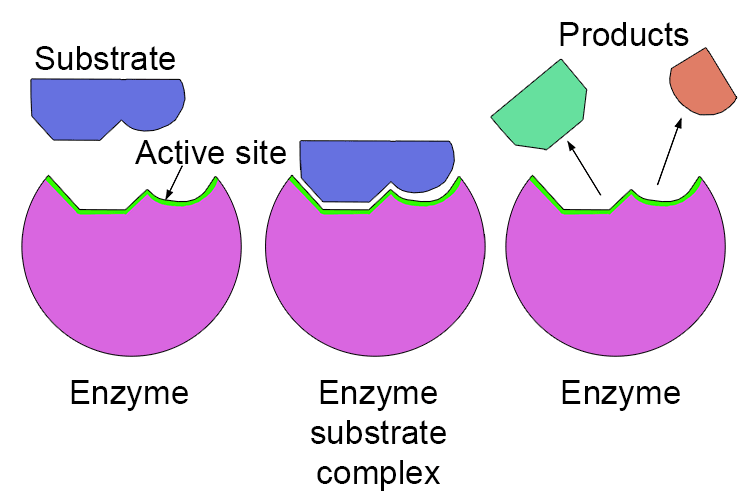
Once the substrate locks into the enzyme to form an enzyme-substrate complex, a reaction can take place and the resultant products can be released. The shape of the active site is unchanged afterwards, so the enzyme can be used again.
If the enzyme is exposed to high levels of heat, PH change or certain chemicals, the active site can change form and no longer fit a substrate. This is known as denaturation.