amylase – enzyme that breaks down complex carbohydrates (starch)
(Pronounced a-mih-layz)
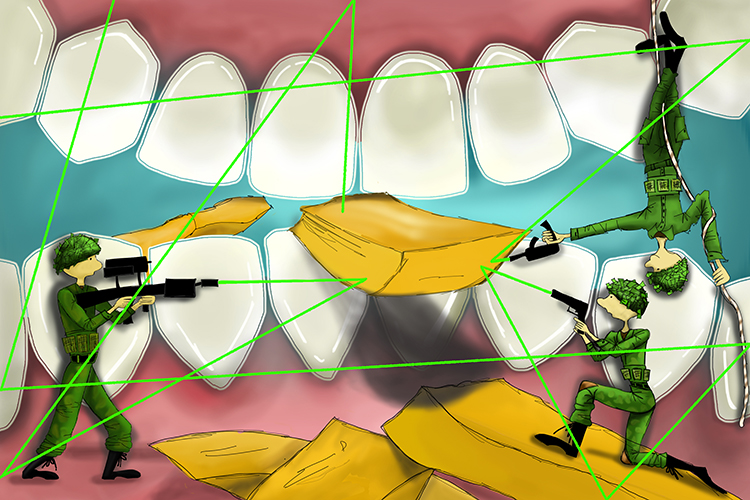
To remember the meaning of amylase, use the following mnemonic:
An army laser (amylase) team, hanging off the ridges inside the mouth, attack and break down chips (carbohydrates) as they come into the mouth.
Amylase is an important digestive enzyme that breaks down starch into simpler sugars during the process of digestion. It is produced in two main locations: the salivary glands and the pancreas. Salivary amylase begins the digestion of starch in the mouth when you chew food, while pancreatic amylase continues this process in the small intestine after being released from the pancreas. The enzyme works by breaking down the chemical bonds in the starch molecules and converting them into glucose, which can be absorbed by the body. Amylase is particularly important for digesting carbohydrate-rich foods like bread, pasta, and potatoes. The enzyme works optimally at body temperature and requires specific pH conditions to function effectively - Salivary amylase works best in the slightly alkaline conditions in the mouth, while pancreatic amylase functions in the alkaline environment of the small intestine created by bile and pancreatic juice.