lipase – enzyme that breaks down fats for digestion
(Pronounced lye-pays)
To remember the meaning of lipase, use the following mnemonic:
The lion pays (lipase) me to break down fatty foods for easier digestion.
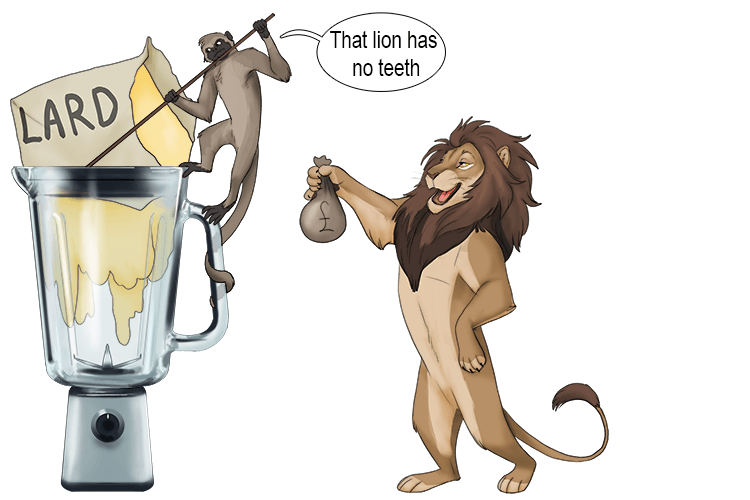
Lipase is a digestive enzyme that specifically breaks down lipids (fats and oils) into smaller molecules that can be absorbed by the body. It is produced mainly by the pancreas and released into the small intestine as part pancreatic juice, though smaller amounts are also produced by the stomach and small intestine itself.
Lipase works by breaking down triglycerides (the main type of dietary fat), breaking them down into glycerol and fatty acids, which are small enough to be absorbed through the intestinal wall. This enzyme is crucial for fat digestion because fats are large, complex molecules that cannot be absorbed in their original form. Lipase works most effectively in the alkaline environment of the small intestine, where bile salts help emulsify fats into smaller droplets, increasing the surface area for the enzyme to act upon. Without lipase, the body would be unable to digest and absorb dietary fats, leading to malnutrition and deficiency of fat soluble vitamins.