binocular vision – vision using two eyes with overlapping fields of view
(Pronounced buh-no-kyoo-luh)
To remember the meaning of binocular vision, use the following mnemonic:
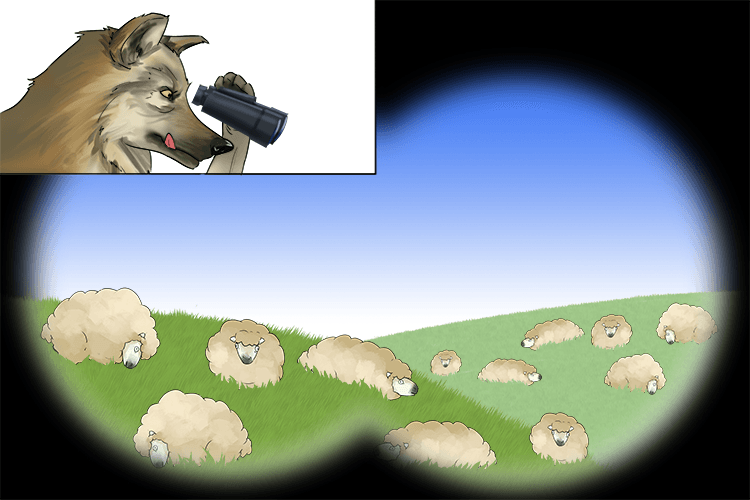
The binoculars gave the wolf a clear vision (binocular vision) of the overlapping fields of sheep.
Binocular vision is the ability to use both eyes simultaneously to create a single, three-dimensional image of the surrounding environment. This occurs when both eyes are positioned forward-facing on the head, allowing their fields of vision to overlap significantly, providing depth perception called stereoscopic vision. Binocular vision is essential for predators like humans, cats and birds of prey, as it enables precise judgements of distance when hunting, catching objects, or navigating through complex environments.
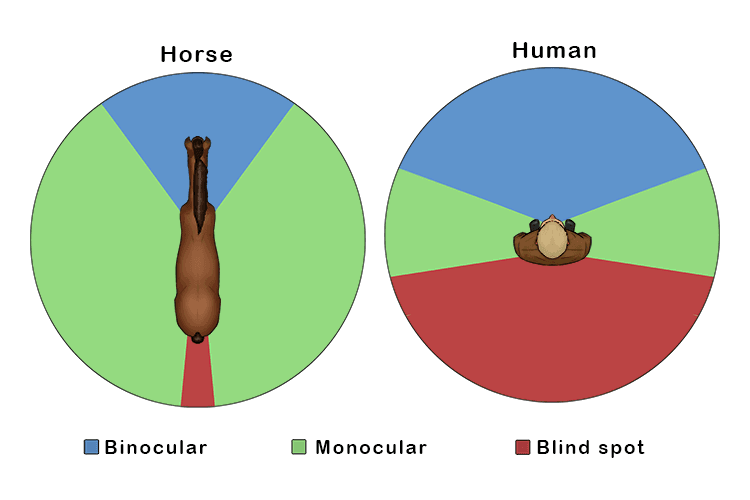
The overlapping fields of vision create a zone of stereoscopic vision where objects can be seen in three dimensions, while peripheral vision from the outer edges of each eye's field provides awareness of movement and potential threats from the side. This type of vision contrasts with monocular vision, where eyes are positioned on the sides of the head (like many prey animals), providing a wider field of view for detecting predators but with reduced depth perception and limited overlapping fields of view.
Few animals will have purely monocular vision, but compared to humans and other animals with eyes in the front of their head, their field of vision is drastically different. A human has mostly binocular vision due to this forward eye position, which maximises frontal sight at the expense of peripheral vision, while the opposite can be seen in a prey animal such as a horse. Differences in vision between a horse and a human can be seen in the following image: