DNA barcoding – a method of identifying species using a short, standardised section of their DNA
Note: Short DNA sections of 700 nucleotides in length can be quickly compared to a database.
To remember the meaning of DNA barcoding, use the following mnemonic:
Baa-coding (barcoding) DNA identifies species.
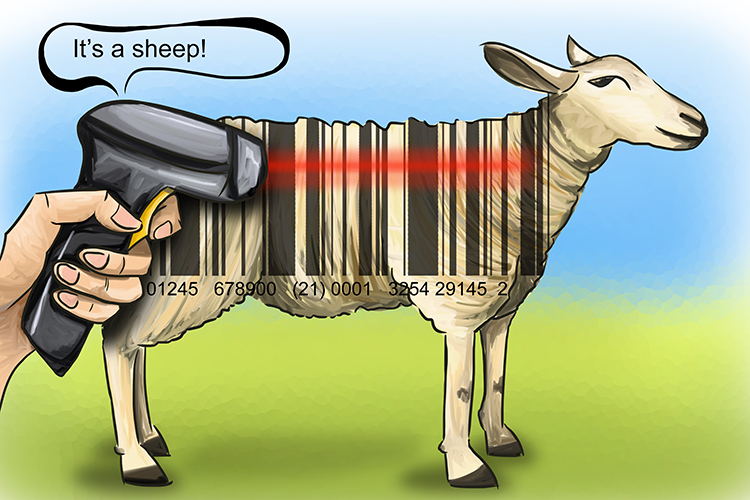
DNA barcoding is a technique used to identify and classify species by analysing short, standardised sections of DNA that act like a unique 'barcode' for each species. Just as products in shops have barcodes that identify them, every species has distinctive DNA sequences that can be used for identification. Scientists typically use specific genes that vary between different species, but remain consistent within one species, making it very accurate. The method is particularly useful when traditional identification methods are difficult or impossible, such as identifying species from fragments, juvenile forms or microscopic organisms.
DNA barcoding has revolutionised taxonomy studies by allowing scientists to discover new species and monitor ecosystems in a much faster, more accurate way.