phylogenetic tree – a diagram that shows the evolutionary relationships between different organisms
(Pronounced fahy-loh-juh-net-ik)
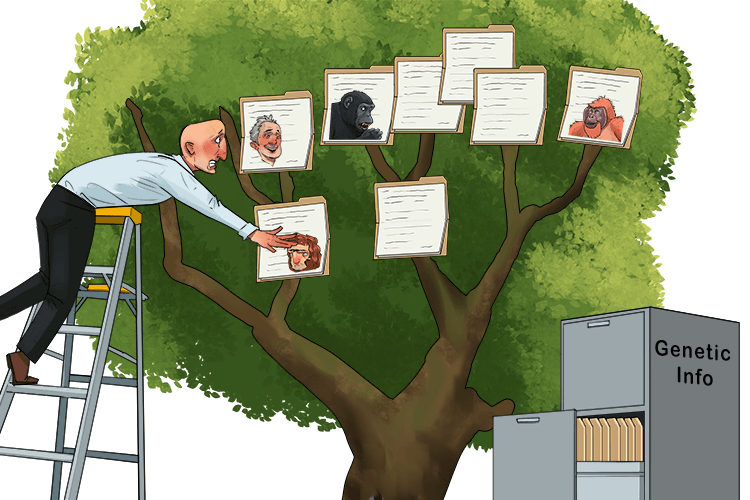
To remember the meaning of phylogenetic tree, use the following mnemonic:
The files were opened and our genetic information was placed in a tree (phylogenetic tree) to show our evolutionary relationships.
A phylogenetic tree, also known as an evolutionary tree, is a branching diagram that illustrates the evolutionary relationships between different species or groups of organisms based on their shared ancestry. The tree structure shows how species have diverged from common ancestors over time, with each branch point representing a split where one ancestral species gave rise to two or more descendant species.
Scientists construct phylogenetic trees using various types of evidence including anatomical similarities, fossil records, DNA sequences, and protein structures.
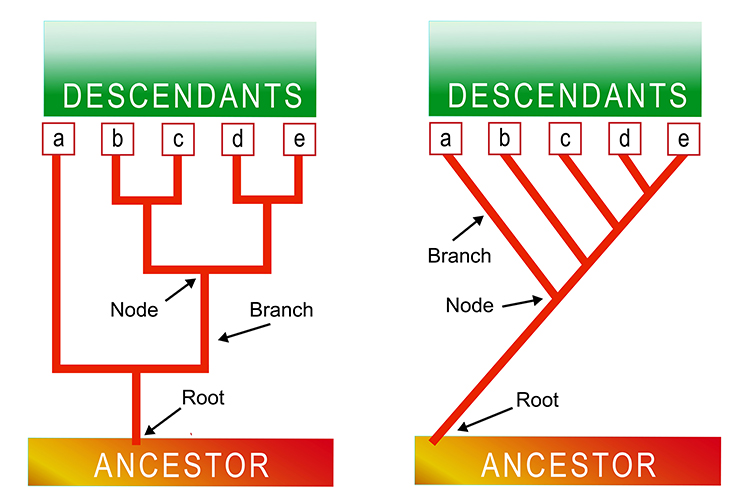
Phylogenetic trees can span different levels of classification, from showing relationships between major groups like vertebrates and invertebrates, down to relationships between closely related species within a genus.
These trees are essential tools in biology for understanding evolution, classifying organisms, predicting characteristics of newly discovered species, and studying how traits have evolved over time.