neurotransmitter – chemical messengers that transmit signals across synapses
(Pronounced nyeu-roh-trans-mih-ters)
To remember the meaning of neurotransmitter, use the following mnemonic:
The new row of transmitters (neurotransmitters) all had chemical messages on them.
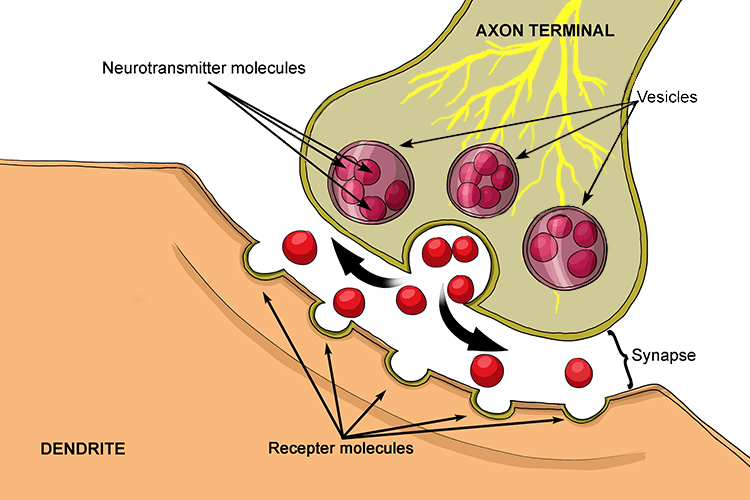
Neurotransmitters are chemical messengers that transmit between nerve cells (neurons) across synapses (a gap) in the nervous system. These chemicals are stored in small vesicles (sacs) at the end of nerve terminals and neurotransmitter molecules are released when an electrical impulse (action potential) reaches them. Once released into the synaptic gap neurotransmitter molecules bind to specific receptor molecules (proteins) on the receiving neuron. The neurotransmitter carries the message to either stimulate or inhibit or stop the action in the next neuron: This process allows information to pass from one neuron to another throughout the brain, spinal cord, and peripheral nervous system. Different neurotransmitters have different effects - for example, dopamine neurotransmitters are involved in reward and motivation, serotonin neurotransmitter affects mood and sleep, and acetylcholine neurotransmitters are important for muscle contraction and memory.
After transmitting their message, neurotransmitters are either broken down by enzymes or taken back up by the sending neuron for reuse.
Neurotransmitters are essential for all nervous system functions including movement, sensation, emotion, and thought process.