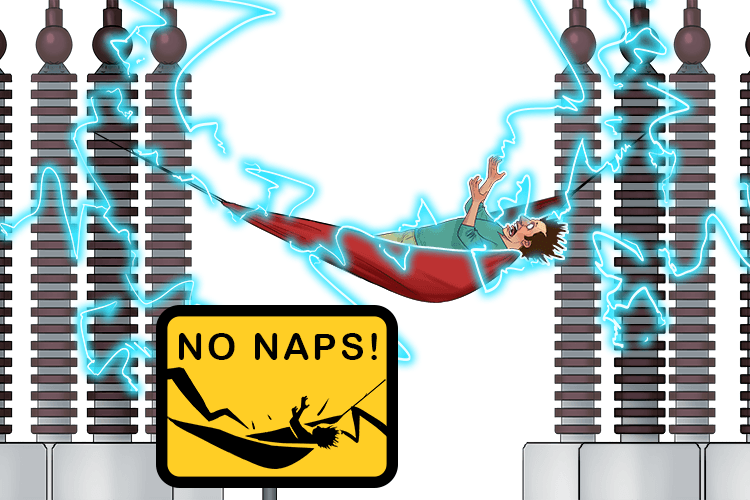
synapse – a gap between neurons where electrical signals pass
(Pronounced sai-naps)
To remember the meaning of synapse, use the following mnemonic:
The sign said "no naps" (synapse) due to electrical signals within the gap.
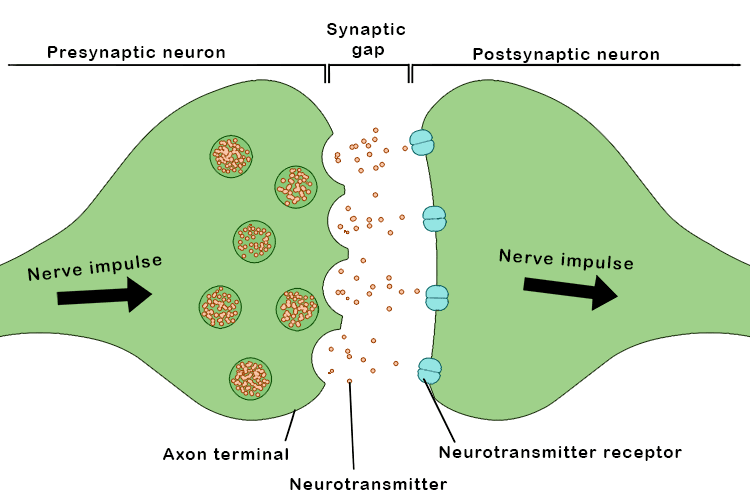
A synapse is a specialised junction between two nerve cells (neurons) or between a nerve cell and another type of cell, such as a muscle cell, where communication occurs through chemical or electrical signals. Most synapses in the human nervous system are chemical synapses, which consist of three main parts: the presynaptic neuron (transmitting neuron), the synaptic gap (small space between cells), and the post synaptic neuron (receiving cell).
When an electrical impulse reaches the presynaptic neuron, it triggers the release of chemical messengers called neurotransmitters into the synaptic gap. These neurotransmitter cells are then picked up by the postsynaptic neuron cells which can then subsequently pass on its own electrical signal and pass on the message.
Synapses are essential for the nervous system as it allows information to be passed on and therefore enable functions such as reflexes, memory formation, and learning.