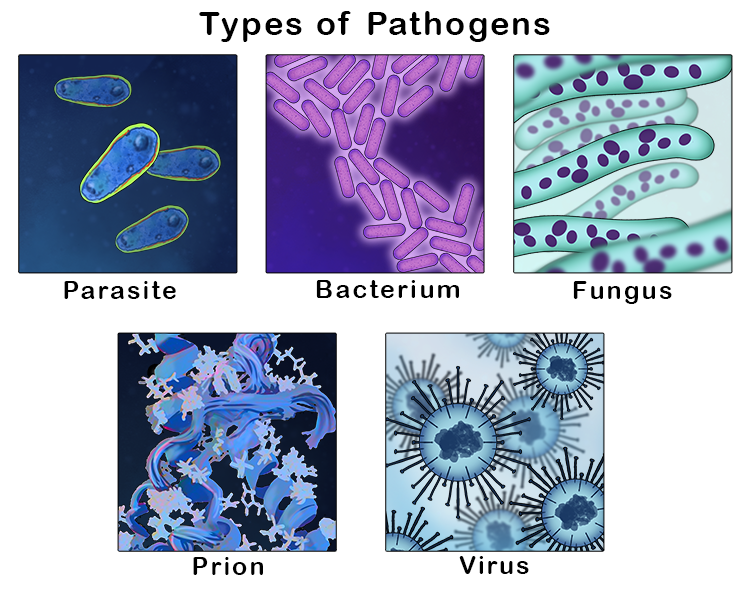
pathogen – microorganism that can cause disease
(Pronounced pa-thuh-juhn)
Note: Pathogens can include; bacteria, viruses, fungi and parasites.
To remember the meaning of pathogen, use the following mnemonic:
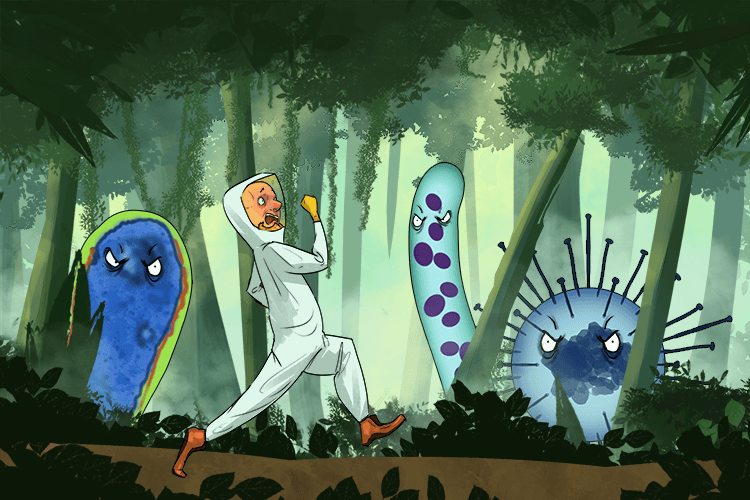
Don't stray off the path in the jungle (pathogen) because there are organisms that cause diseases.
A pathogen is any microorganism that causes disease in living organisms, including humans, animals, and plants. Pathogens can enter the body through various routes such as through cuts in the skin, by being inhaled, or through contaminated food and water. Once inside the body, pathogens reproduce and produce toxins and damage cells, which leads to the symptoms of illness.
Different pathogens cause different diseases - for example, bacteria cause illnesses like food poisoning and tuberculosis, while viruses cause diseases such as influenza and measles. The body's immune system works to detect and destroy pathogens to prevent or fight off infections.