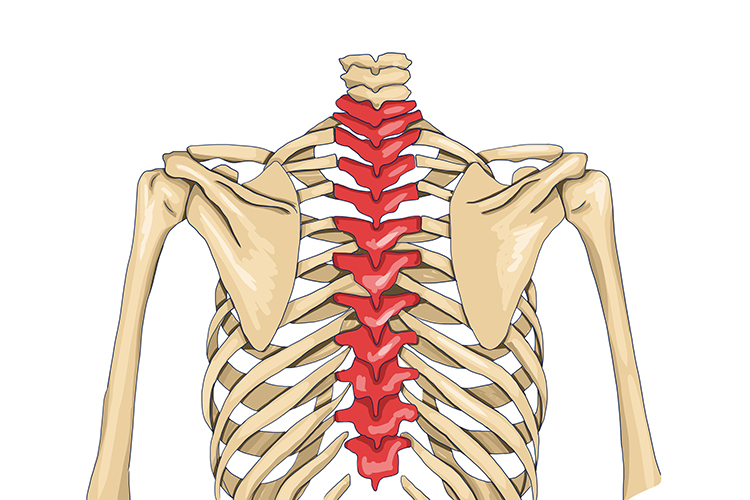
thoracic vertebrae – bones that make up the middle section of the spine
(Prnounced thor-ra-sik)
Note: There are 12 bones in the middle section of the spine.
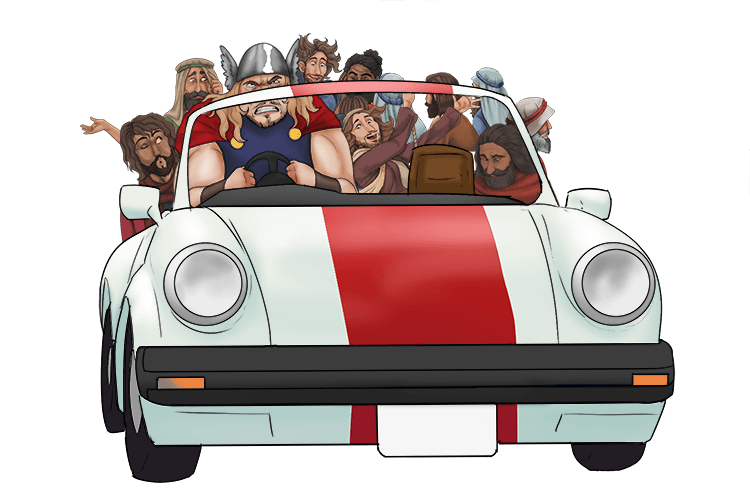
To remember the meaning of thoracic vertebrae, recall that there are twelve, and use the following mnemonic:
Thor drove a classic (thoracic) car while the twelve apostles annoyed him from the back seats.
The thoracic vertebrae are the twelve middle vertebrae of the spine, numbered T1 to T12, that form the upper and middle back region. They are distinguished by their unique articulations with the ribs to form the thoracic cage. They also serve as attachment points for numerous muscles involved in breathing, posture, and back movement, including the intercostal muscle that help maintain spinal alignment.
The natural curve of the thoracic vertebrae helps accommodate the heart and lungs while distributing mechanical forces throughout the spinal column, and the restricted movement in this region provides a stable foundation for the more flexible cervical and lumbar regions above and below.