vacuole – a membrane - bound, bubble-like organelle within a cell which contains fluid
(Pronounced va-kyoo-ohl)
Note: a vacuole is an organelle.
To remember the meaning of vacuole, use the following mnemonic:
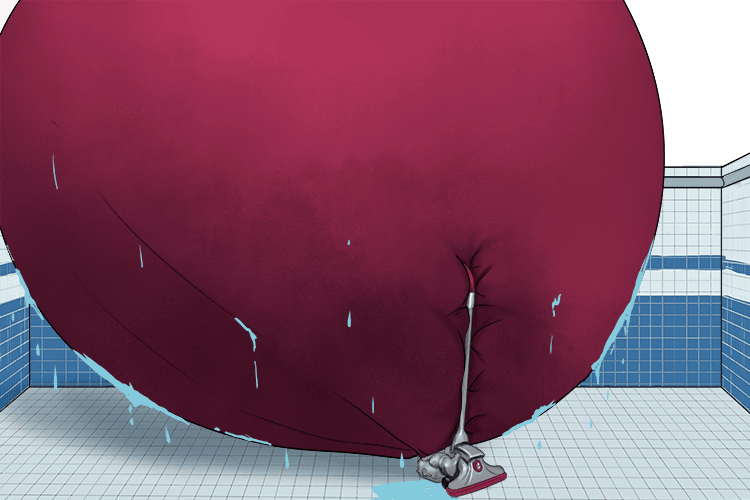
After vacuuming the whole (vacuole) pool, the vacuum cleaner bag was a huge bubble of water.
A vacuole is a membrane-bound organelle found in both plant and animal cells, though it varies significantly in size and function between these cell types. In plant cells, the vacuole is typically very large, often occupying 70-90% of the cell's volume, and is filled with cell sap (a watery solution containing sugars, salts and other dissolved substances). The primary function of the plant vacuole includes storing water to maintain the cell's structure and storing various substances like sugar and ions. In animal cells, vacuoles are much smaller and more numerous, serving functions such as transporting materials, storing substances temporarily, and helping with digestion and waste removal. Vacuoles in animals typically only occupy 1-5% of the cells volume.
When plant cells lose water and the vacuole shrinks, the cell becomes flaccid and the plant wilts, demonstrating the vacuole's crucial role in maintaining plant structure. They also play important roles in plant growth by allowing cells to increase in size primarily through water uptake rather than by producing more cytoplasm.
Animal cell
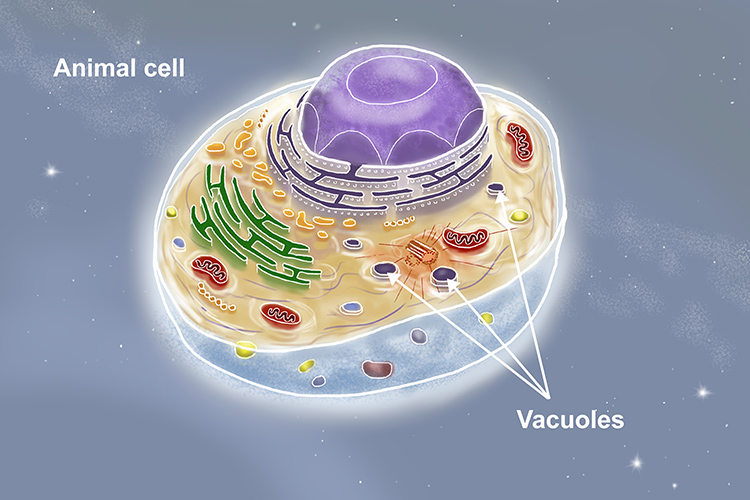
There are several vacuoles in an animal cell.
Plant cell
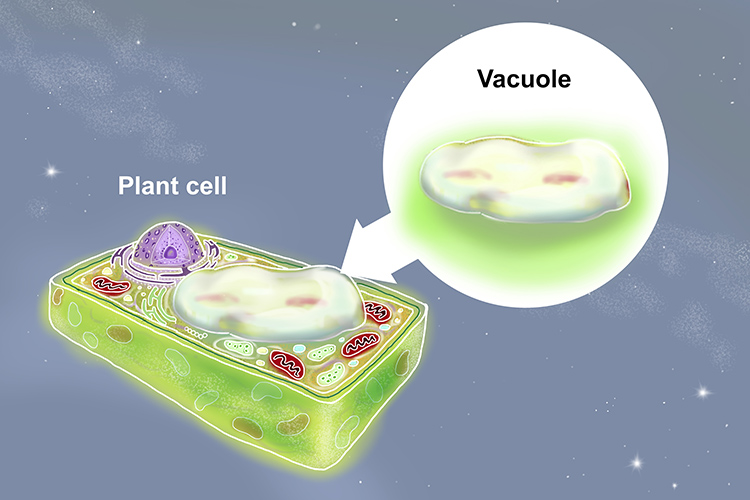
A plant cell has just one large vacuole.