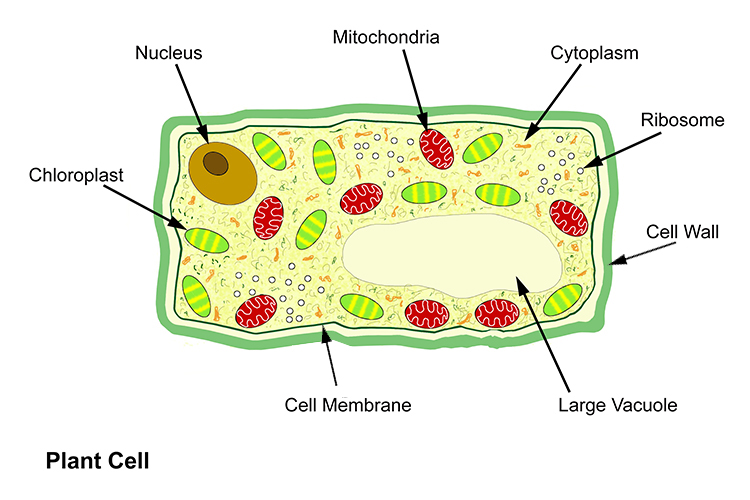
cell wall – a rigid, protective layer that provides support and protection to cells in plants
(Pronounced sel-wall)
To remember the meaning of cell wall, use the following mnemonic:
Around the cell, they built a wall (cell wall) to add a layer of protection.

The cell wall is a rigid structural layer that surrounds the cell membrane (plasma membrane) in plant cells, fungi, and bacterial cells, but is absent in animal cells. In plant cells, the cell wall is primarily composed of cellulose fibres arranged in a strong, mesh-like pattern that provides structural support and protection.
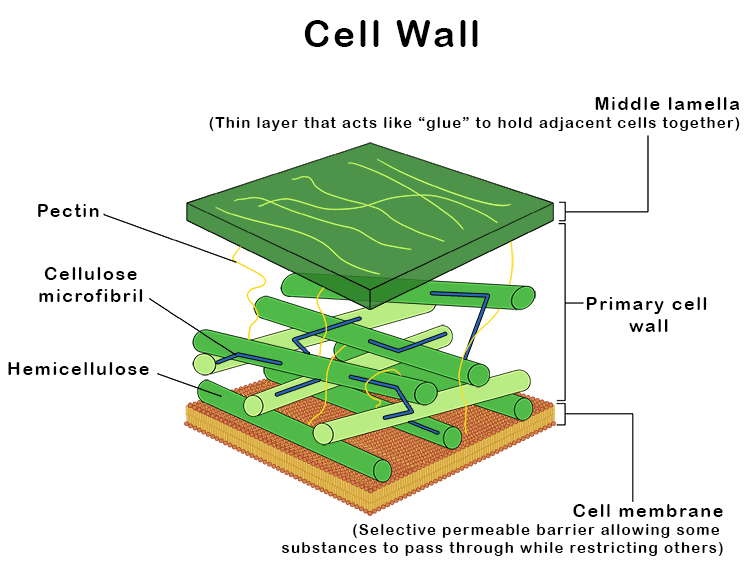
The primary functions of the cell wall include maintaining the cell's shape, preventing over-expansion when water enters the cell, providing mechanical support to help plants stand upright, and protecting the cell from physical damage and pathogens. The cell wall is permeable, meaning it allows water, gases and small molecules to pass through freely, unlike the plasma membrane beneath, which as a selective cell membrane, does not allow these to pass through.
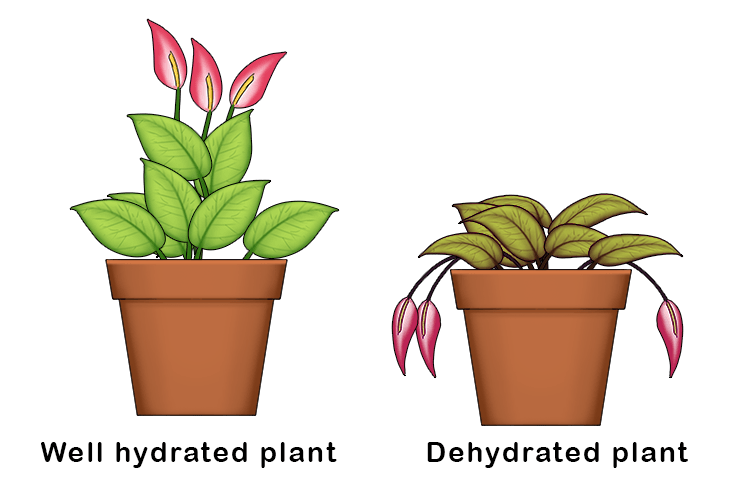
In plant cells, the cell wall works together with turgor pressure (water pressure inside the cell) to provide rigidity - when cells are full of water, they push against the cell wall, creating the structural support that keeps plants upright.
The cell wall also plays a crucial role in plant growth, as new cell wall material is deposited during cell division and expansion. The presence of cell walls is one of the key differences between plant and animal cells, and understanding this structure helps explain why plants can grow to great heights and maintain their shape without an internal skeleton like animals have.